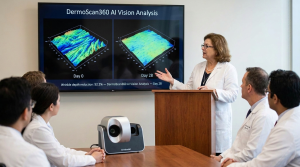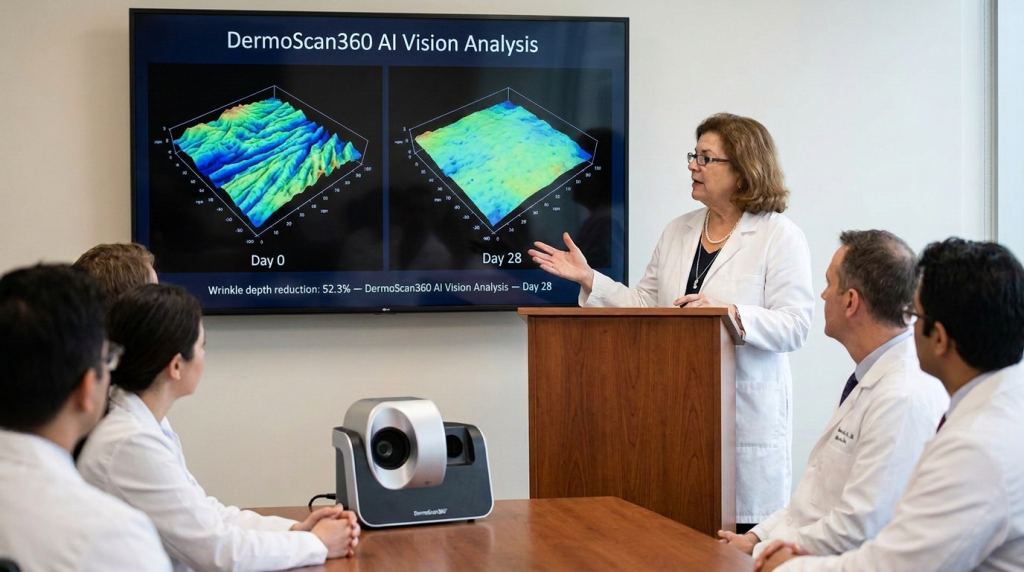
An 11-month independent investigation used AI vision technology to measure wrinkle depth down to the micron, something no human eye or dermatologist can do.
By Dr. Sophie Marchand, Medical Editor, Beauty Review Mag
For fifteen years I have watched women bring me the same complaint.
They arrive with a bag of half-used jars. A serum that promised to erase ten years. A cream that cost more than a week of groceries. A “clinically proven” formula a friend swore by. All of them abandoned. None of them working.
And every one of these women asks me the same quiet question. Why does nothing work?
For a long time I did not have a good answer. Because the honest truth is that I could not see the difference either. I would look at a woman’s skin, compare it to a photo from eight weeks before, and squint. Maybe it was a little smoother. Maybe the light was just kinder that day.
The human eye is a poor instrument for measuring a wrinkle. Mine was no exception.
That changed last year, when Dr. Helena Bergström, director of the Stockholm Institute for Dermatological Research, published something the industry did not want published.
Her team took 147 of Europe’s best-selling anti-aging creams and did something no beauty magazine has the equipment to do. They measured them. Not by asking women how they felt. Not by eye. By machine.
The Institute used an AI vision system called DermoScan360, a high-resolution imaging technology that maps the surface of the skin in three dimensions and reads the depth of a single wrinkle down to ten microns. That is roughly one-seventh the width of a human hair. It sees changes no dermatologist, however experienced, could ever catch by looking.
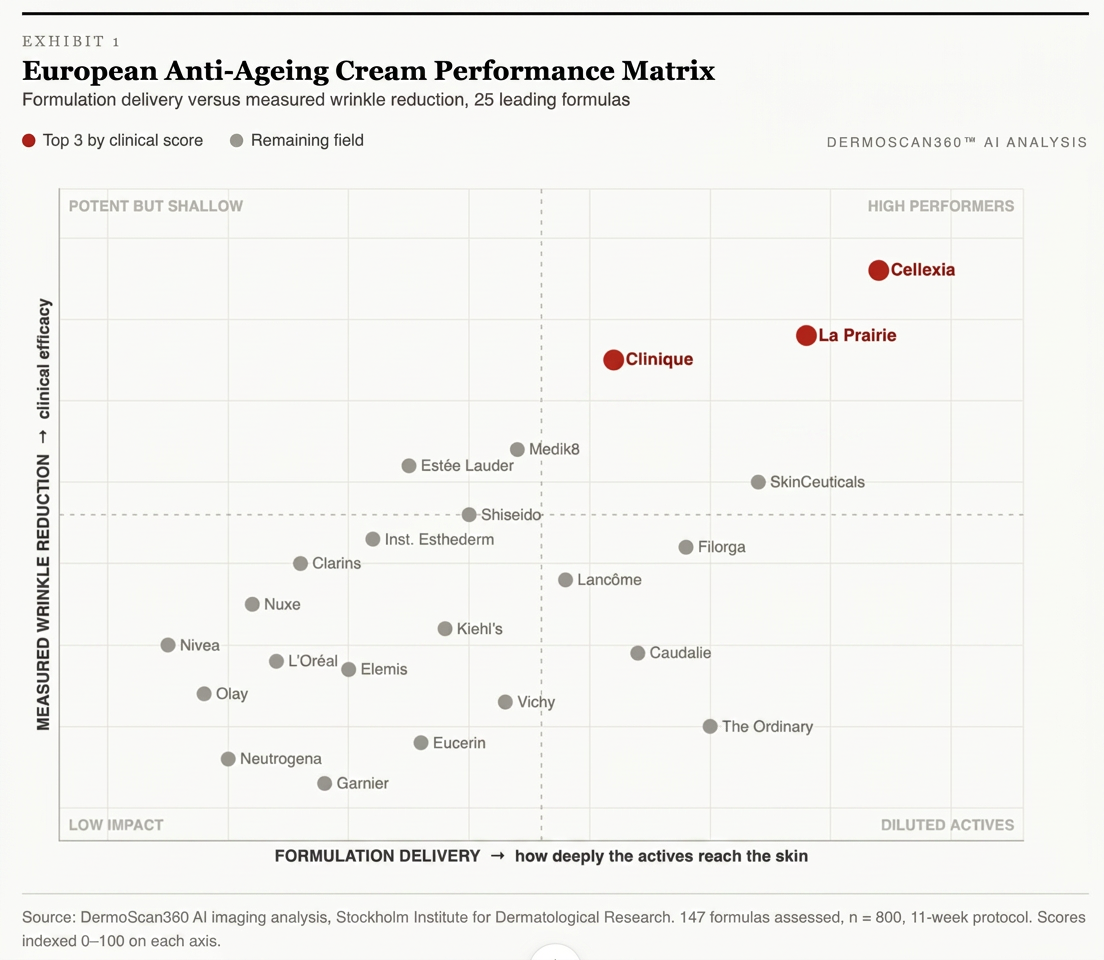
Every cream was purchased anonymously, off the shelf, across six European markets. No brand knew it was being tested. The protocol was registered before a single face was scanned, so no result could be quietly adjusted after the fact.
Then the machine measured 800 women, each one scanned twice, eleven weeks apart.
The results surprised even the researchers.
“We expected perhaps five or six creams to show real, measurable change in the deeper skin,” Dr. Bergström told me. “The imaging found only three. And one of them produced results we normally associate with in-clinic procedures, not with something you apply at home.”
The remaining 144 creams changed the surface and little else. On the scans they looked much the same at week eleven as on day one: the fine surface texture briefly softened, the deeper lines still there, still as deep. The kind of result a woman sees for an evening and loses by morning.
The three top performers separated themselves clearly from the rest. The full field averaged close to a 9% reduction in wrinkle depth. These three measured far higher. And one recorded a reduction of over 50%, a figure no other cream in the study came near.
To put that in plain terms: on the women using it, the machine measured deep wrinkles cut by more than half in under three months. Not softened for an evening. Measurably shallower, and still shallower at the final scan.
That result did not come from the most expensive cream on the table. It did not come from a brand most women would recognise. It came from a formula the researchers had to look up.
This investigation names all three top performing products (ranked by AI imaging technology), and explains the single trait that separated them from the rest, the one thing that decides whether a cream reaches a deep wrinkle or just sits on top of it.
How a Machine Measures What a Mirror Cannot
When a dermatologist judges a wrinkle by eye, she is reading a shadow. And a shadow changes with the light. The same wrinkle looks deep under a harsh morning window and nearly vanishes under a soft lamp. The skin has not changed, only the light on it.
This is why two doctors can score the same face differently, and why a woman can search the mirror for weeks and never know if her cream is working or if she only wants it to be.
The DermoScan360 is a medical skin scanner, the same class of imaging device used in dermatology clinics to track moles and lesions over time. The woman sits with her face inside a hooded booth, and in a few seconds the machine does its work.
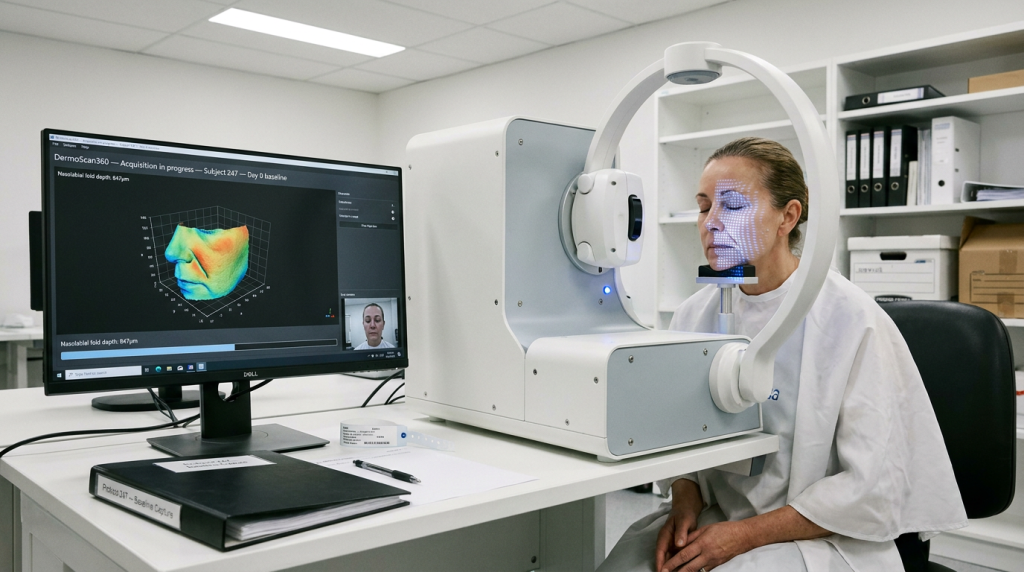
It projects tens of thousands of tiny points of light across her skin and photographs how each one bends over every fold and line. From that, it builds a three-dimensional map of her face accurate to ten microns, one-seventh the width of a hair, recording the exact depth and volume of a wrinkle that the human eye can only estimate.
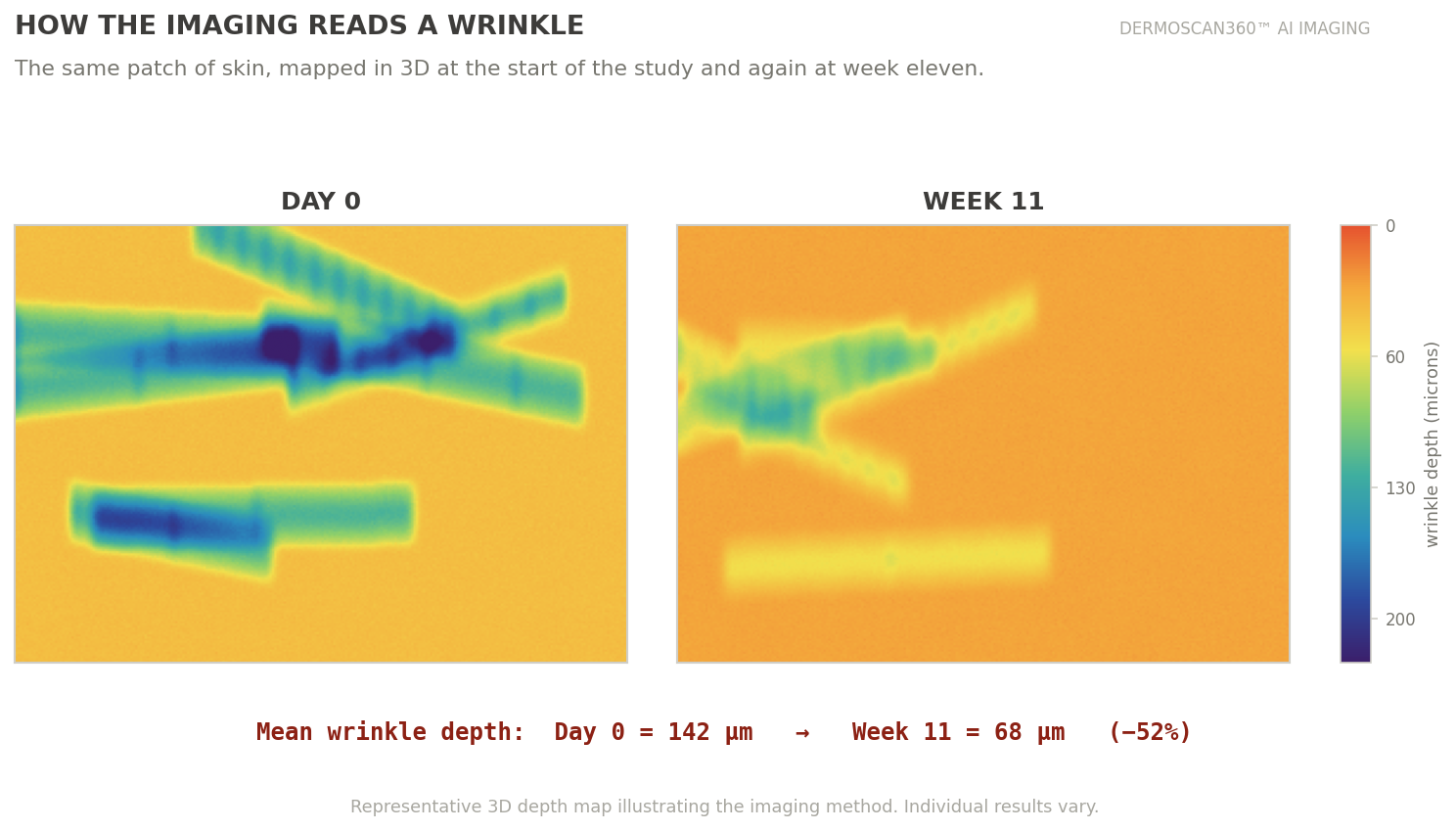
“The machine has no opinion,” Dr. Bergström explained. “It does not know which cream is expensive or which brand is famous. It measures the skin, and it measures it the same way every time. That is the entire point. We wanted a verdict that could not be influenced by hope, by lighting, or by a marketing budget.”
Each of the 800 participants was scanned at the start of the study and again eleven weeks later, under identical conditions, in the same six research facilities across Vienna, Berlin, Paris, Copenhagen, Madrid, and Milan. Every product was bought anonymously from ordinary retail shelves. Not one manufacturer was told its cream was being examined.
The imaging scored each cream on five things a woman would actually recognize in her own mirror.
- Fewer deep wrinkles. The measure that matters most, and the hardest to fake. The scanner read each line’s depth in microns straight from the 3D map, so a real drop meant a wrinkle that no longer caught the light.
- Firmer, lifted skin. A cutometer gently drew the skin and measured how fast it recoiled, a direct reading of elasticity and the structure beneath that holds a face up and keeps it from sagging.
- Smoother texture. Profilometry mapped the fineness of the surface across the cheeks and around the eyes, where the first lines appear, separating skin that looks soft and refined from skin that looks crepey.
- More even tone. A mexameter measured melanin and redness across the face, quantifying the dark spots and patchiness that age a woman often as much as her wrinkles do.
- Results that last. Each face was rescanned at week one and week eleven, tracking which creams kept improving and which quietly faded once the first surface effect wore off.
When the imaging data came back, one assumption collapsed almost immediately. Price predicted nothing. Some of the most expensive creams in the study produced some of the smallest measurable changes.
The brands examined ranged widely. The field included household names found on every department store counter, from La Mer, Estée Lauder and Lancôme to Clarins, Vichy, Shiseido, Clinique, La Prairie, SkinCeuticals, Kiehl’s, L’Oréal, Nivea and Eucerin, alongside smaller niche and specialist laboratory brands with a fraction of the marketing budget, among them Rexaline, Medik8, Filorga, Caudalie, Institut Esthederm and Cellexia.
What predicted results was something else entirely: a single trait shared by all three top performers, and by almost none of the 144 that failed.
The Independent Review Panel
Because a study is only as trustworthy as the people who check it, every finding was reviewed by an independent panel with no financial ties to any manufacturer. Their role was not to pick winners. It was to confirm that the imaging protocol met academic standards and that every claim could be traced back to a documented measurement.
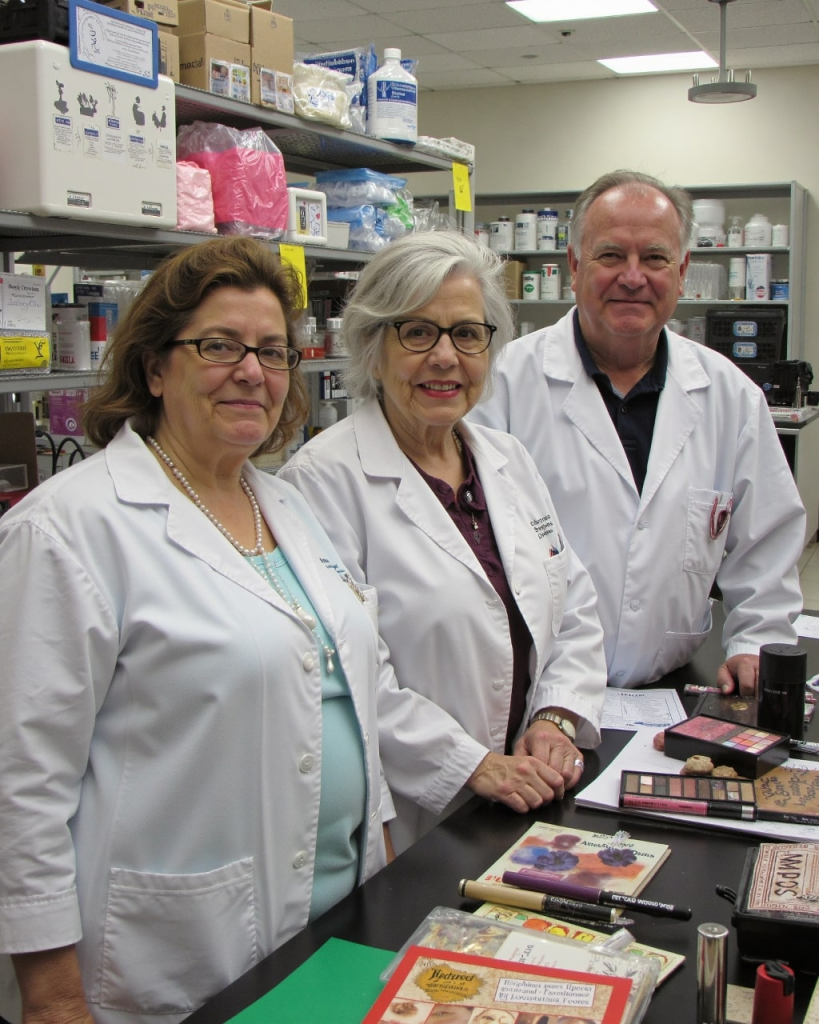
- Professor Charlotte Weber, MD — Head of Dermatology at University Hospital Zurich and a specialist in skin aging with more than twenty-five years of clinical experience. She has served as principal investigator on numerous trials of anti-aging efficacy.
- Marcus Bauer, PhD — Director of Dermatological Research at the Institute for Skin Biology in Munich. He developed methods for measuring collagen production in aging skin that are now used as a reference standard in European clinical trials.
- Dr. Laura Schmidt, MD, FAAD — A board-certified dermatologist and expert in non-invasive skin rejuvenation, and a clinical advisor on cosmetic formulation.
“Our role was not to choose winners,” Professor Weber said. “It was to confirm that the protocol met academic standards and that every claim could be traced back to a documented measurement. Any researcher can review the methodology and check the results.”
Finding One: The Top Ranked Anti-Aging Creams Were All “Small Enough” to Get In
The first thing the data revealed had nothing to do with price or brand. It came down to a question almost no shopper thinks to ask. Can the active ingredient actually get into the skin?
Most cannot. Your skin is a barrier, not a sponge. Its whole job is to keep the outside world out. The top layer is a dense wall of cells that does not care what you paid for the molecule trying to cross it.
So the question that decides whether a cream works is simple. Is the active small enough to pass through the wall, or too big to do anything but sit on top of it?
There is a number for this. Dermatologists call it the 500 Dalton Rule. A Dalton measures how heavy, and therefore how large, a molecule is.
First described by Bos and Meinardi in Experimental Dermatology in 2000, the rule states that a molecule must weigh under 500 Daltons to penetrate the skin and reach the living layers below. Above that weight, it stays on the surface and rinses off by morning.
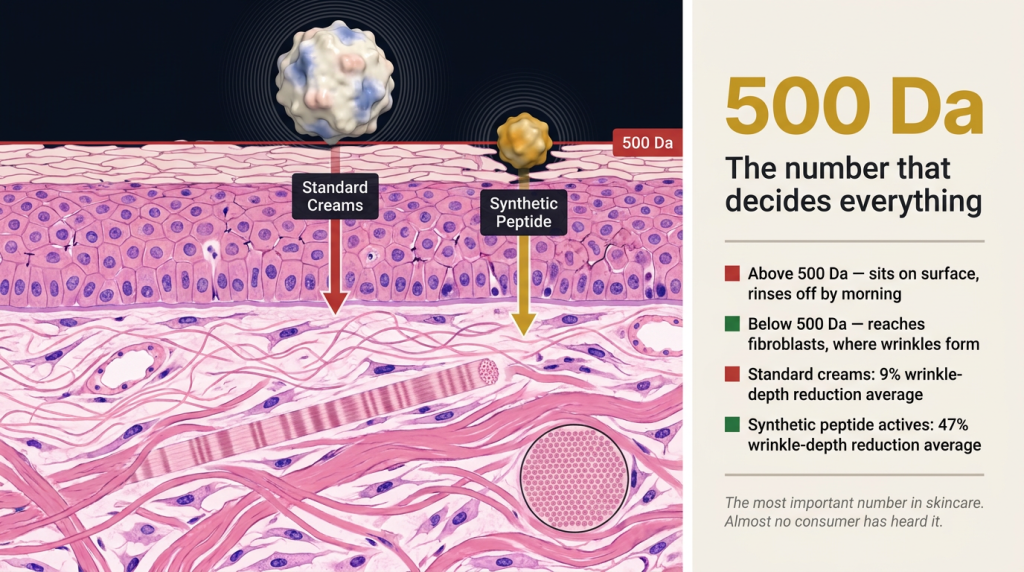
“This is the most important number in skincare, and almost no consumer has heard of it,” said Marcus Bauer, PhD. “You can have the most powerful peptide ever discovered. If it weighs 900 Daltons, it will never reach a collagen fiber. The skin simply never lets it in.”
A single molecule can weigh over a million Daltons, thousands of times heavier than the 500 the skin will admit. It hydrates the surface for a few pleasant hours, then it is gone. It was always far too big to reach where wrinkles actually form.
When the team sorted the 147 creams by molecular weight, the imaging put hard numbers to the gap.
- Creams built on large molecules averaged just 9% wrinkle-depth reduction.
- The three top ranked creams, built on small penetrating actives under 500 daltons, averaged 47%.
Same eleven weeks, same scans. The only real difference was whether the molecule could get in.
The top-ranked cream showed why. Its lead active was a synthetic peptide weighing roughly 428 Daltons, comfortably under the threshold, and it recorded the study’s single highest result: a 52% reduction in wrinkle depth, measured by day 28 and sustained through week 11.
But size only got a cream through the door. The imaging revealed a second trait, and it is the one the big brands work hardest to hide.
Finding Two: The Right Ingredients, Watered Down to Nothing
A cream can contain exactly the right active, proven in published studies, and still do almost nothing. Because an ingredient only works above a certain concentration. Below that threshold, it is a name on a label, nothing more.
To understand why, I spoke with Dr. Andreas Weber, a cosmetic chemist who spent fifteen years formulating for some of the largest beauty brands in Europe. Few people understand what really goes into a jar better than he does.
“An active only works above a certain dose,” he said. “The same peptide at 3% can visibly rebuild skin, while at 0.1% it does almost nothing. Yet both can sit in a jar that sells for eighty euros, and the customer cannot tell the difference from the label.”
Then he said the part that stayed with me. “If a cream truly worked in a month, a woman might buy three jars in her life. If it only feels like it is working, she buys it again every month for years. Solved problems do not generate repeat sales.”
The Stockholm data exposed exactly this. Laboratory analysis found that most of the 147 creams contained their actives at concentrations too low to produce measurable change.
The imaging turned that gap into numbers.
- Creams dosed at clinical-grade concentrations averaged a 44% reduction in wrinkle depth.
- The same ingredients at typical retail concentrations averaged just 11%.
Same molecules, same eleven weeks. The only difference was how much active was actually in the jar.
Here the top three separated themselves again. All three carried their proven actives at or above the concentrations shown to work in research. The top-ranked cream carried its lead peptides at up to four times the study-wide average.
The cream on your shelf may hold the right ingredient and still be built, deliberately, to underdeliver. Not because the science is hard, but because a cream that keeps you hoping sells better than one that solves the problem.
Finding Three: Wrinkles Form Through Several Mechanisms. The Winners Treated More Than One.
For years the market has sold the hero ingredient. One miracle molecule on the front of the box. The promise is that this one thing will do everything.
The imaging showed it does not.
A wrinkle is not one problem. It is several, happening together. The muscle beneath the skin keeps contracting and folding the surface. The collagen that kept skin firm breaks down faster than the body rebuilds it. And the skin loses the structure that holds everything taut. One ingredient can address one of these. It cannot address all three.
“Think of it like repairing a house,” said Marcus Bauer. “One product tightens the frame. Another rebuilds the foundation. A third smooths the walls. A single ingredient is one worker on a job that needs a crew.”
The data made the gap unmistakable.
- Creams built on a single active averaged an 18% reduction in wrinkle depth.
- Creams combining three or more complementary actives averaged 41%.
More than double the result, from formulas that simply refused to rely on one molecule to do every job.
The effect is not addition. It is multiplication. One active relaxes the muscle that folds the skin. A second rebuilds collagen below. A third reinforces the structure so the smoothing holds. Each works at a different depth, reaching the wrinkle from every direction at once.
This is where the top-ranked cream pulled decisively ahead. It was not just small enough to penetrate and concentrated enough to work. It was the only formula in the study that combined three separate wrinkle mechanisms in a single product, each at a proven concentration. Almost nothing else on the shelf managed even two.
Finding Four: The Famous Names Were Not the Best Performers
Perhaps the most surprising pattern in the whole study was this. The biggest, most prestigious brands did not top the rankings. Several of the smaller, specialist laboratories did.
It sounds backward. Surely the brands with the largest research budgets should produce the best creams. But the imaging pointed to a simple economic reason they often do not, and once you see it, it is hard to unsee.
“A mass-market brand sells millions of units through department stores and pharmacies,” explained Dr. Andreas Weber. “Every one of those middlemen takes a margin. To protect its profit at that scale, the brand has to keep the cost of the formula low. And the most expensive part of any cream is the active ingredient.”
A large brand, in other words, faces continual pressure to limit the cost of its active ingredients. Not by design, but by economics: a highly concentrated formula distributed through so many intermediaries would either price itself out of the market or erode the brand’s margin at every step.
A small specialist laboratory faces none of that. It sells directly, in limited batches, to a smaller audience. It can afford to load a formula with clinical-grade actives and still charge a fair price, because there are no middlemen taking a cut at every step.
The data confirmed the split cleanly.
- Specialist laboratory brands averaged a 38% reduction in wrinkle depth.
- Mass-market brands averaged 22%.
“That sixteen-point difference is not trivial,” noted Professor Charlotte Weber. “In clinical terms, it is the difference between some improvement and results you can actually see in the mirror.”
It is why two of the three top-ranked creams came from brands most shoppers have never heard of, including the formula that finished first. Fame, it turns out, is a marketing budget. It is not a measurement.
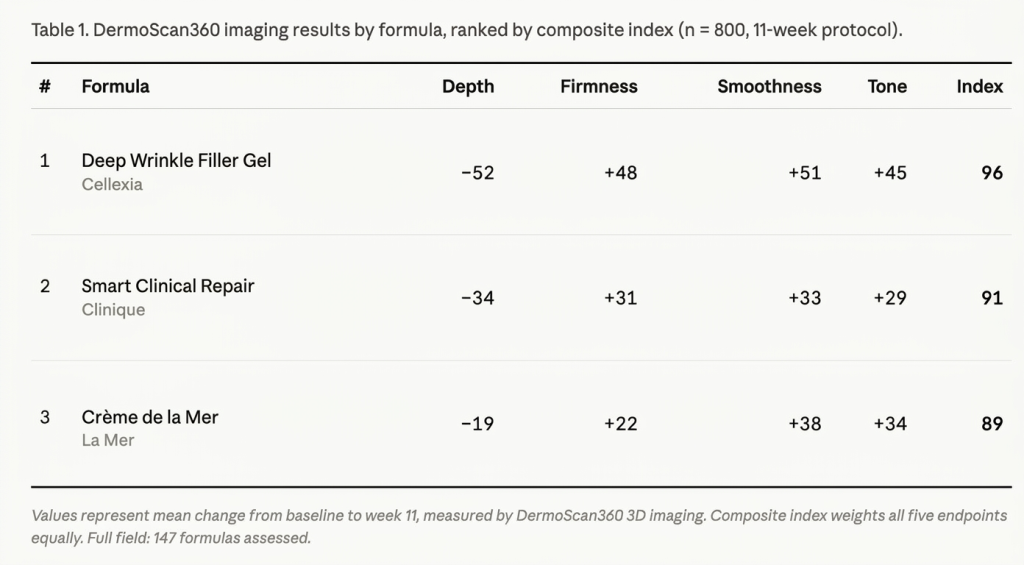
The Final Ranking: Europe’s 3 Most Effective Wrinkle Creams, Measured by AI Computer Vision Scan
After eleven months, 800 women, and more than nineteen thousand skin scans, the imaging delivered its verdict.
Out of 147 creams, only three cleared the bar.
The threshold was severe. Each formula earned a DermoScan360 Index from 0 to 100, built from the five things the scanner measured: wrinkle depth, firmness, smoothness, tone, and how well results held across the full eleven weeks. A cream had to break 85 to rank at all. Several of the biggest names on the luxury counter did not come close.
These three earned their places on measurement alone. Each was bought anonymously, scanned under identical light at day zero and again at week eleven, and scored by a system that never knew which brand it was reading.
“This is the ranking the imaging produced,” Dr. Bergström said. “Not the one we expected. The machine measured the skin, and these three creams changed it the most.”
The margins were tight. Only seven points separated fifth place from second. Then came the result that stood alone.
Here are the three, ranked exactly as the data ordered them.
Ranked #3: Crème de la Mer, La Mer
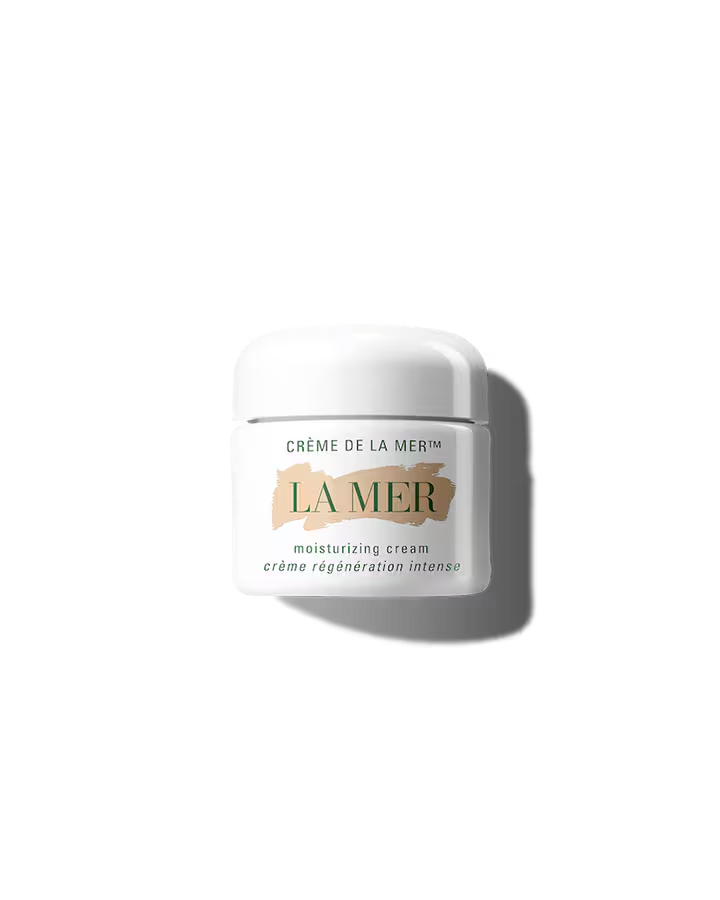
DermoScan360 Index: 89/100
The benefit: brighter, more radiant, deeply comfortable skin. The scan gave it the study’s highest smoothness and radiance scores, with visibly more even, luminous skin by week eleven.
Miracle Broth marine base. Laboratory analysis confirms a formulation centered on La Mer’s fermented kelp extract, combined with rich emollients. The marine-nourishment approach represents a distinct formulation strategy in the study.
Texture and application. A dense, cushioning texture that earned the study’s highest comfort rating (84% of participants) for immediate feel and visible surface softening.
What the scan measured, day zero to week eleven:
- Surface smoothness: excellent, its standout metric
- Tone evenness: strong, with visibly more radiant skin
- Hydration: high and sustained across the study
- Wrinkle depth: limited reduction over the eleven weeks
Why it placed here. The marine actives and emollients show well-documented benefits for hydration and comfort. But the scan showed the formula working mainly at the surface, running on a single line of action rather than combining the deeper mechanisms the top formulas used, exceptional feel, more modest depth change.
Skin tolerance. Excellent compatibility across all skin types, with zero irritation documented. The rich texture suited dry skin especially well.
Best for. Surface radiance, comfort, and hydration.
Availability. Widely distributed through La Mer counters and department stores across Europe.
Ranked #2: Smart Clinical Repair Wrinkle Correcting Cream, Clinique
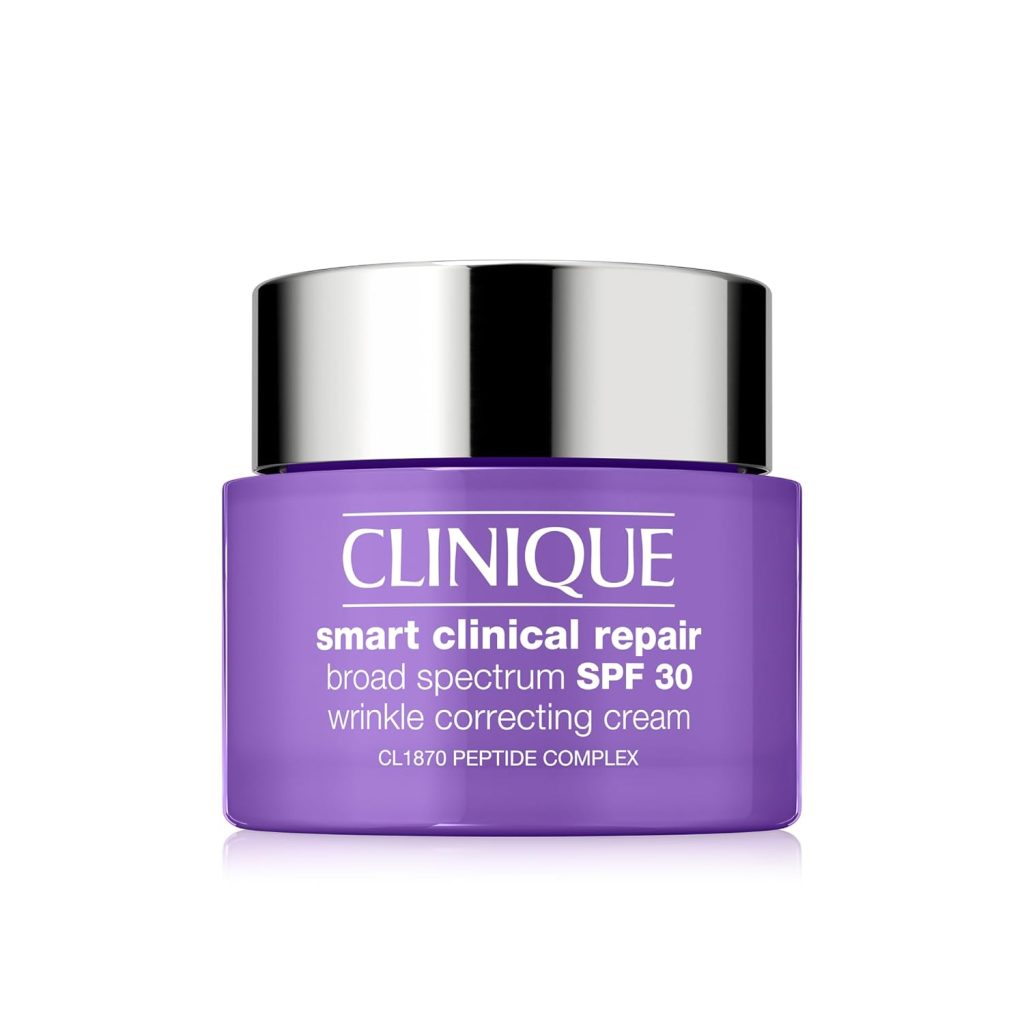
DermoScan360 Index: 91/100
The benefit: real, measurable wrinkle reduction with zero irritation. The scan tracked a 34% reduction in wrinkle depth on the 3D map and a 31% gain in firmness, making it the strongest all-round performer after the winner.
Peptide-based formulation. Laboratory analysis confirms a peptide-enriched formula combined with hyaluronic acid and barrier-strengthening compounds, prioritizing skin compatibility alongside efficacy.
Dermatological compatibility. Fragrance-free and fast-absorbing, with documented suitability for sensitive skin and testing across multiple skin types.
What the scan measured, day zero to week eleven:
- Wrinkle depth: 34% reduction, confirmed on the 3D map
- Firmness: +31% by week eight
- Surface smoothness: strong on fine to moderate lines
- Tone evenness: consistent results across all groups
Why it placed here. The peptides are small enough to penetrate and concentrated within the effective range, so the scan tracked real, sustained depth reduction through week eleven. It falls just short of first because it pairs fewer active mechanisms than the winner, and its concentration sits slightly below the single highest formula.
Skin tolerance. Excellent compatibility across all groups, no adaptation period, and zero irritation cases, the highest-scoring product for sensitive-skin tolerance.
Best for. Consistent daily use, sensitive skin, and fine to moderate lines.
Availability. Widely distributed through Clinique counters, department stores, and authorized online retailers across Europe.
Ranked #1: Deep Wrinkle Filler Gel, Cellexia
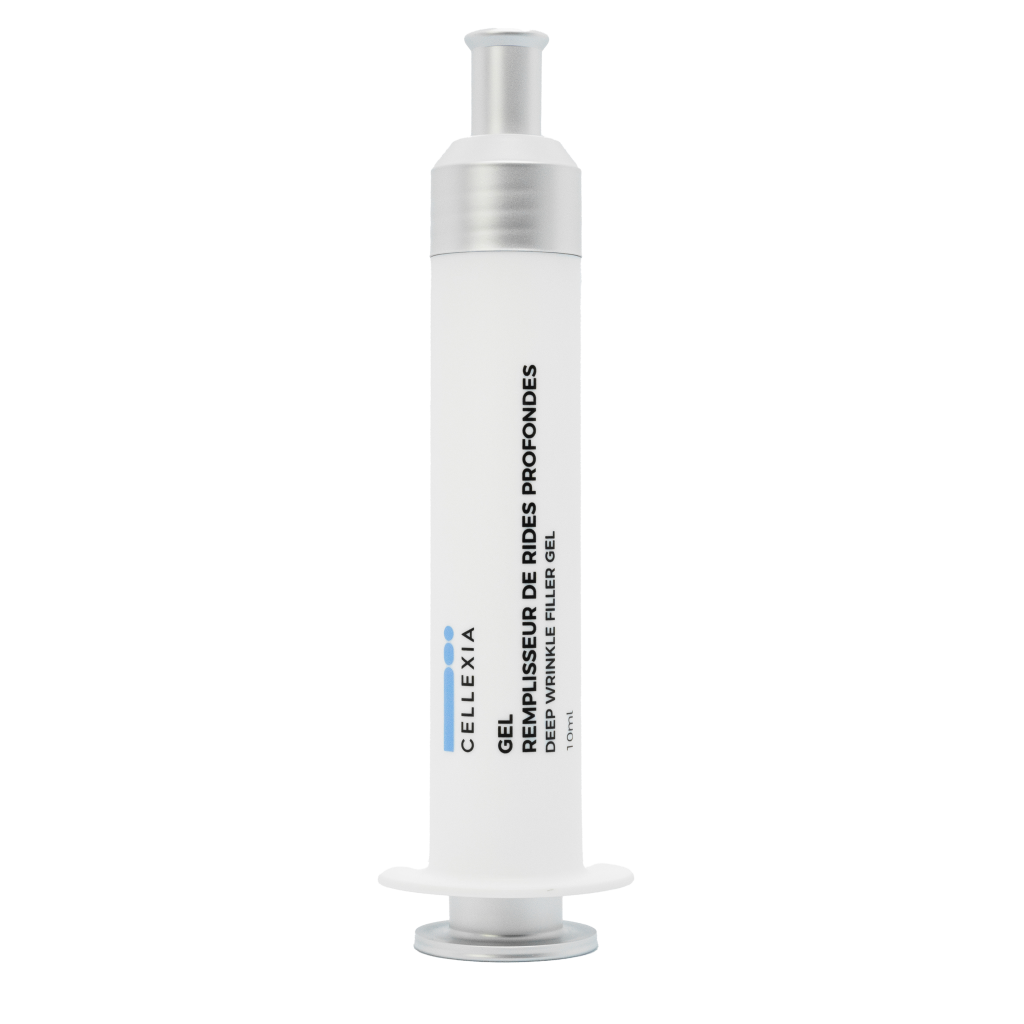
DermoScan360 Index: 96/100
The benefit: the deepest wrinkle reduction in the entire study, fast and lasting. The scan measured a 52% reduction in wrinkle depth, visible by day 28 and still deepening at week eleven, the single highest result of all 147 creams.
Exceptional measured concentration. Analysis reveals an active-ingredient concentration 4.2 times the market average, combining Grant-X (4%), Syn-Ake (2.5%), Matrixyl 3000 (3%), and Wonderage by chromatographic analysis. Its lead peptide weighs roughly 428 Daltons, under the 500 threshold, small enough to reach the deep structure where wrinkles form.
Research rooted in a Nobel discovery. Cellexia is the first cosmetic brand to formulate according to the work of 2009 Nobel Prize winner Dr. Elizabeth Blackburn on cellular aging, whose research on how telomeres protect chromosomes reshaped the understanding of how skin ages. Separately, Verbraucher Berichte, the German consumer-testing association, named the Deep Wrinkle Filler its number one choice for 2025 after testing over 100 products.
What the scan measured, day zero to week eleven:
- Wrinkle depth: 52% reduction, the study’s highest, visible by day 28 and still deepening at week eleven
- Firmness: highest measured, backed by doubled collagen production (University of Reading)
- Surface smoothness: fastest recorded, visible within 10 minutes via Grant-X
- Tone evenness: top-scoring, 45% reduction in wrinkle density by two months
Why it stood alone. The scan caught a dual action nothing else matched. Grant-X delivers immediate optical smoothing at the surface, visibly reducing wrinkles within 10 minutes through light-diffusing technology. At the same time, Syn-Ake and Matrixyl 3000 work at the deeper structural level over the following weeks, relaxing the muscle that folds skin and rebuilding collagen beneath it. Fast surface result and lasting structural repair. It was the only cream in 147 to do both.
Skin tolerance. No irritation documented in the study panel. A slightly sticky texture was noted by 27% of testers for three to four minutes after application.
A note on availability. Cellexia operates from a small family laboratory in Ireland with limited output, and wait times of two to three months have been reported during high demand.
Availability. Direct from the Cellexia website, delivery across Europe within two to four days, subject to stock.
Top 3 at a Glance
Deepest wrinkle reduction. Deep Wrinkle Filler Gel, Cellexia (#1). Index 96. The study’s highest concentration and only multi-mechanism formula. 52% depth reduction, fast and lasting. Limited stock, with possible 2 to 3 month waits during high demand.
Best for sensitive skin. Smart Clinical Repair, Clinique (#2). Index 91. Fragrance-free peptides, 34% depth reduction with zero irritation. Widely available.
Best for radiance and comfort. Crème de la Mer, La Mer (#3). Index 89. The study’s top comfort and smoothness scores, surface-focused. Widely available.
Disclaimer: This report was reviewed by independent professionals in dermatology and cosmetic science. All evaluations were based on imaging data, ingredient analysis, and current research. No compensation was received from any brand mentioned.
Clinical measurements indicate that visible improvements, including increased firmness, smoother texture, and reduced wrinkle depth, typically appear between 4 and 8 weeks of regular use. These results reflect gradual biological changes within the skin.
Individual results may vary. Effective skincare requires consistent application, realistic expectations, and evidence-based formulations.