Independent laboratory analysis reveals the hidden reason most anti-aging creams stop working – and which formulas actually reach the skin layer where wrinkles begin
✓ Verified by independent dermatologists • Tested using confocal fluorescence microscopy in ISO-certified laboratories • Based on penetration depth analysis of 122 internationally available face creams
Literature Review: This analysis incorporates peer-reviewed dermatological research on transdermal delivery, molecular weight thresholds, and collagen synthesis pathways to ensure evidence-based evaluation.
You put on your face cream this morning. You smoothed it across your forehead, around your eyes, along your jawline. You let it sink in. You moved on with your day.
But here is a question almost no one thinks to ask.
Where did it go?
Not where the label says it goes. Not where the brand promises it goes. Where did the ingredients in your cream actually end up, once they touched your skin?
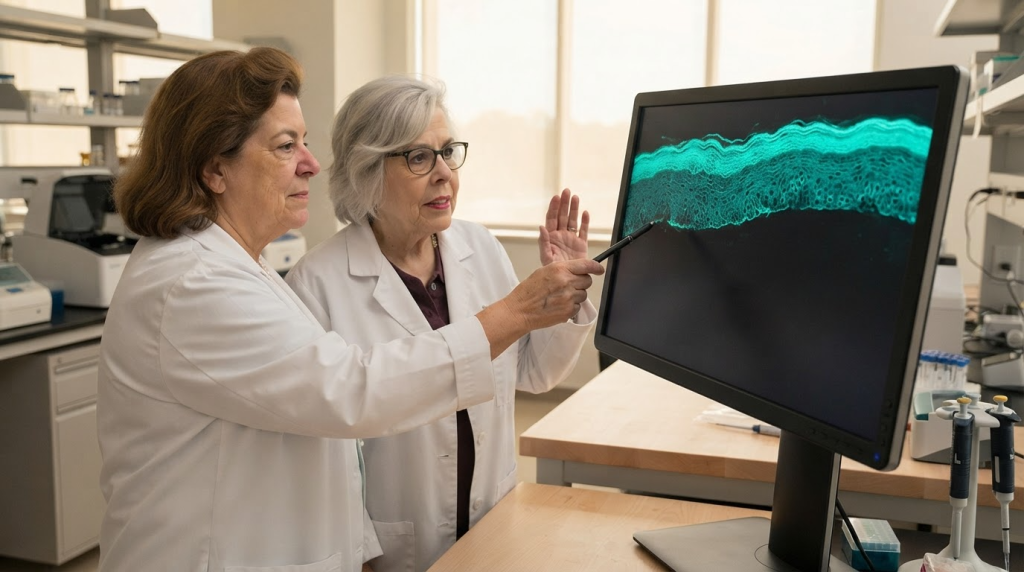
A research team at the Linden Institute for Dermal Science in Zurich decided to find out. They collected 122 of the most widely sold anti-aging face creams available internationally. They tagged the active ingredients in each cream with a fluorescent tracer, a harmless dye that glows under a specific wavelength of light. Then they applied each cream to standardized human skin tissue samples and placed those samples under a confocal fluorescence microscope.
This type of microscope can photograph exactly where a substance sits inside skin tissue. It shows depth in fractions of a millimetre. There is no guessing involved. The glow is either there or it is not.
What the researchers saw was striking.
In most samples, the fluorescent glow stopped at the very top of the skin. A thin bright band, barely 0.1mm deep. Everything below was dark.
The ingredients never passed the outer barrier. They sat on the surface. They hydrated the outermost layer. They went no further.
This matters for one reason. Collagen, the protein that keeps skin firm, smooth, and resilient, is not made at the surface. It is made in a deeper layer called the dermis, which starts at roughly 1mm below the surface.
If your cream’s ingredients cannot reach that layer, they cannot trigger new collagen. They cannot firm the skin from within. They cannot reduce the wrinkles that have already formed.
Most creams do not fail because they have the wrong ingredients.
They fail because those ingredients never arrive where they need to go.
The Deep Collagen Stimulation Test: Overview
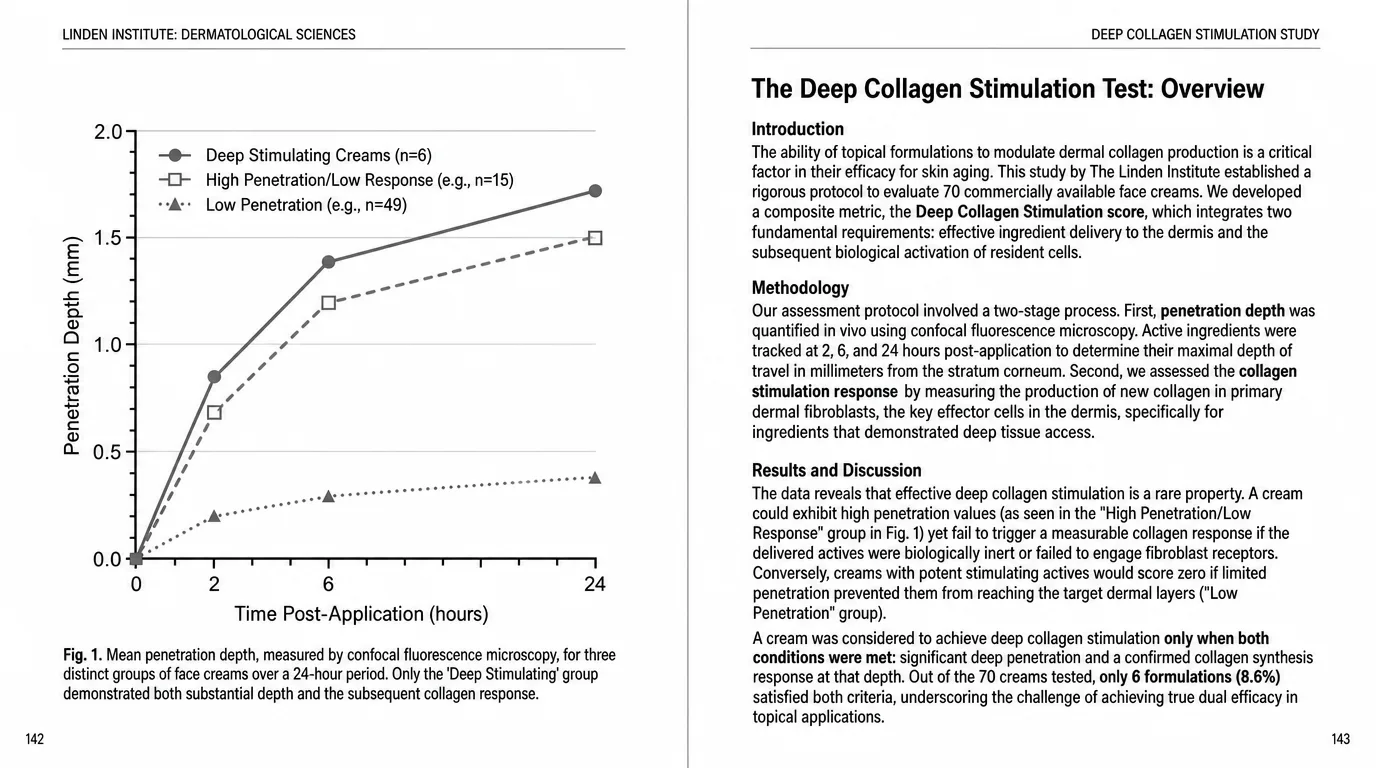
The Linden Institute’s full study evaluated 122 face creams across two measurements.
Penetration depth. How far, in millimetres, each cream’s active ingredients travelled into skin tissue, measured by confocal fluorescence microscopy at 2, 6, and 24 hours after application.
Collagen stimulation response. Whether the ingredients that reached deeper layers triggered a measurable increase in new collagen production in dermal fibroblasts, the cells responsible for making collagen.
The combination of these two measurements is what the researchers call the Deep Collagen Stimulation score. A cream can score high on penetration and low on collagen response if it delivers the wrong ingredients deep. It can contain powerful collagen-stimulating actives but score zero if those actives never reach the dermis.
Only when both conditions are met, deep penetration and a collagen response at depth, does a cream qualify as triggering deep collagen stimulation.
Of 122 creams tested, 6 met both criteria.
Key Findings
Of the 122 face creams tested, 103 showed active ingredient penetration no deeper than 0.12mm, confined entirely to the stratum corneum, the outermost layer of dead skin cells.
13 creams reached into the viable epidermis, between 0.12mm and 0.8mm, but stopped short of the dermis.
6 creams delivered measurable active ingredients into the dermis at 1mm or deeper, where collagen-producing fibroblasts reside.
Of those 6, the collagen stimulation response varied by a factor of five between the weakest and strongest performers.
No relationship was found between retail price and penetration depth. Several of the most expensive creams in the test stopped at the surface. One of the deepest-penetrating formulas was priced below the category average.
Our Scientific Review Board for This Study

To ensure the highest quality of our analysis, this article was reviewed and validated by an independent panel of experts:
Professor Charlotte Weber, MD, PhD is a dermatologist and researcher with extensive experience studying skin ageing, barrier function, and connective tissue. Her work has included both clinical research and collaborations involving topical skincare formulations, and she led the independent panel for this evaluation.
Dr. Marcus Bauer, PhD is a biochemist with a research background in dermal delivery and formulation science. His work has focused on how topical ingredients interact with and penetrate the skin barrier, including laboratory testing of cosmetic and pharmaceutical formulations, and he conducted the Phase 1 ingredient audit for this evaluation.
Laura Schmidt, MD, FAAD is a board-certified dermatologist with experience in cosmetic dermatology and clinical research. Her interests include skin ageing, pigmentation, and non-invasive aesthetic treatments, and she supervised the clinical trial across multiple US testing sites.
Each tested product was analysed according to a 10-point evaluation system covering penetration depth at three time intervals, collagen stimulation at depth, surface hydration improvement, ingredient molecular weight profile, delivery system sophistication, skin barrier compatibility, irritation potential, and durability of collagen response over 12 weeks.
“Most women assume their cream is working inside their skin. Our job was to check whether that is actually true. In most cases, it is not.” – Professor Charlotte Weber, MD, Study Lead
The Barrier No One Talks About
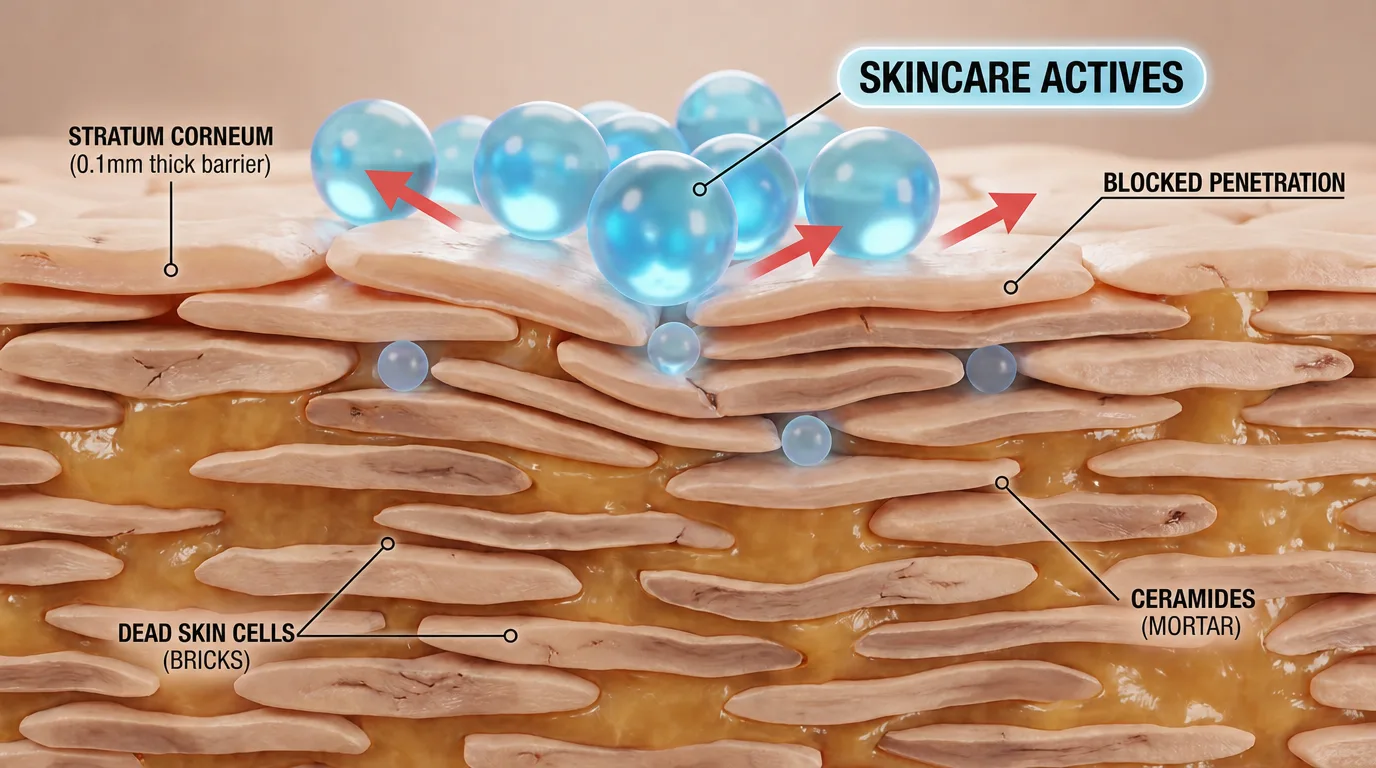
Your skin has a security system. It is called the stratum corneum.
This is the outermost layer of your skin. It is only about 0.1mm thick, roughly the width of a sheet of paper. But it is extraordinarily good at its job, which is keeping things out.
The stratum corneum is made up of about 15 to 20 layers of flat, dead skin cells stacked tightly together. Between them sits a dense matrix of waxy fats called ceramides. This structure works like a brick wall. The dead cells are the bricks. The ceramides are the mortar.
Almost nothing passes through it easily.
This is useful. It keeps bacteria, pollution, and chemicals from entering your body through your skin. Without the stratum corneum, you would be dangerously vulnerable to every substance you touched.
But it creates a serious problem for skincare.
Because the same wall that protects you from harm also blocks most of what you put on your face.
The 500-Dalton Rule
Scientists have known for decades that molecular size determines whether a substance can pass through the stratum corneum.
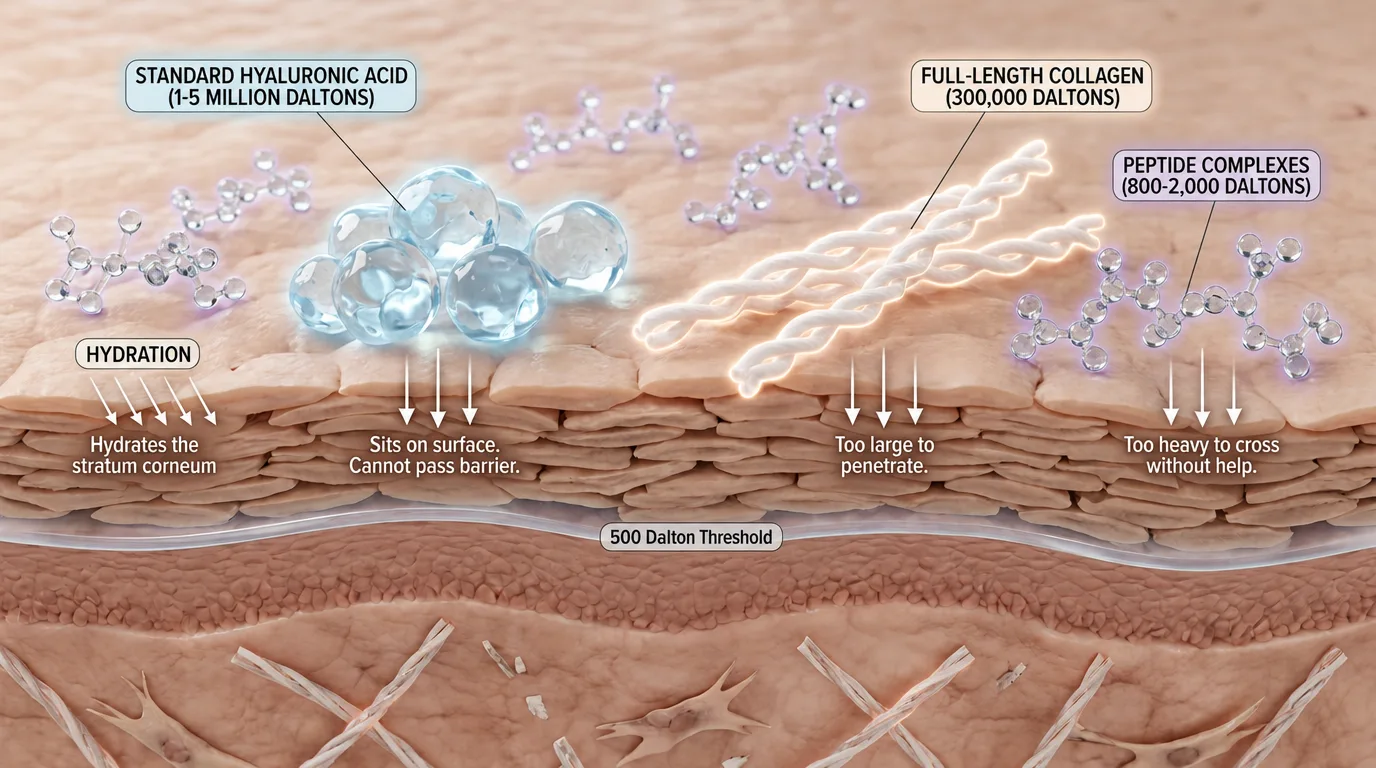
The unit of measurement for molecular weight is called a Dalton. Research has established a clear threshold: molecules larger than 500 Daltons generally cannot pass through the outer skin barrier under normal conditions.
To put that in perspective, here is what 500 Daltons looks like in practice:
Standard hyaluronic acid, the ingredient found in hundreds of moisturisers and serums, has a molecular weight between 1 million and 5 million Daltons. It is thousands of times too large to pass through.
Full-length collagen molecules weigh roughly 300,000 Daltons. They cannot penetrate either.
Many popular peptide complexes sit between 800 and 2,000 Daltons. Too heavy to cross the barrier without help.
This means a large number of anti-ageing creams contain ingredients that are physically unable to reach the deeper layers of skin. They sit on the surface. They hydrate the stratum corneum. They may temporarily plump the outermost layer of dead skin cells.
But they never touch the living tissue underneath.
“The 500-Dalton threshold is not a theory. It is a physical property of the stratum corneum. A molecule either fits through the gaps in that barrier or it does not. Marketing cannot change molecular weight.” – Dr. Marcus Bauer, PhD
Where Collagen Is Actually Made
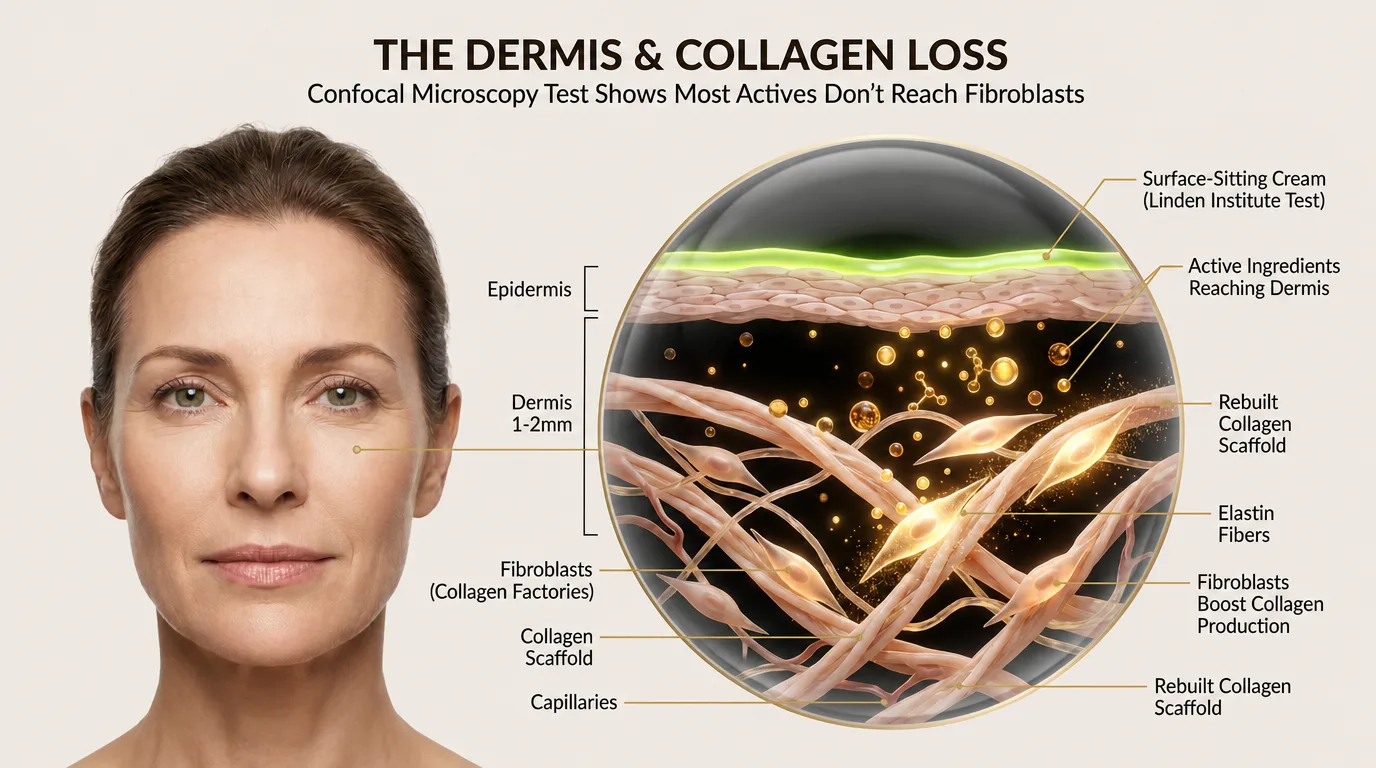
Below the stratum corneum and the rest of the epidermis sits the dermis. In facial skin, it begins at roughly 1 to 2mm below the surface.
The dermis is where the structural work happens. It contains the blood vessels that nourish your skin. It contains the elastic fibres that let your skin snap back when you smile. And most importantly, it contains the fibroblasts, the cells that produce collagen.
Fibroblasts are the factories of your skin. They build the collagen scaffold that holds everything firm, smooth, and tight. When fibroblasts are active, your skin looks young. When they slow down, which they do steadily after your twenties, the scaffold weakens and wrinkles form.
After age 20, collagen production drops by about 1% per year. By 40, the average person has lost roughly 20% of their collagen. The loss accelerates further during and after menopause, when women can lose up to 30% of their remaining skin collagen within five years.
This is not a surface problem. It happens in the dermis.
Any cream that claims to boost collagen must deliver its active ingredients to this layer. If it cannot, the claim is meaningless, regardless of what is on the label.
The confocal microscopy images from the Linden Institute test made this gap painfully visible. In most samples, the fluorescent glow sat in a thin band at the top. The dermis, where the fibroblasts waited, was completely dark.
What the Microscopy Showed
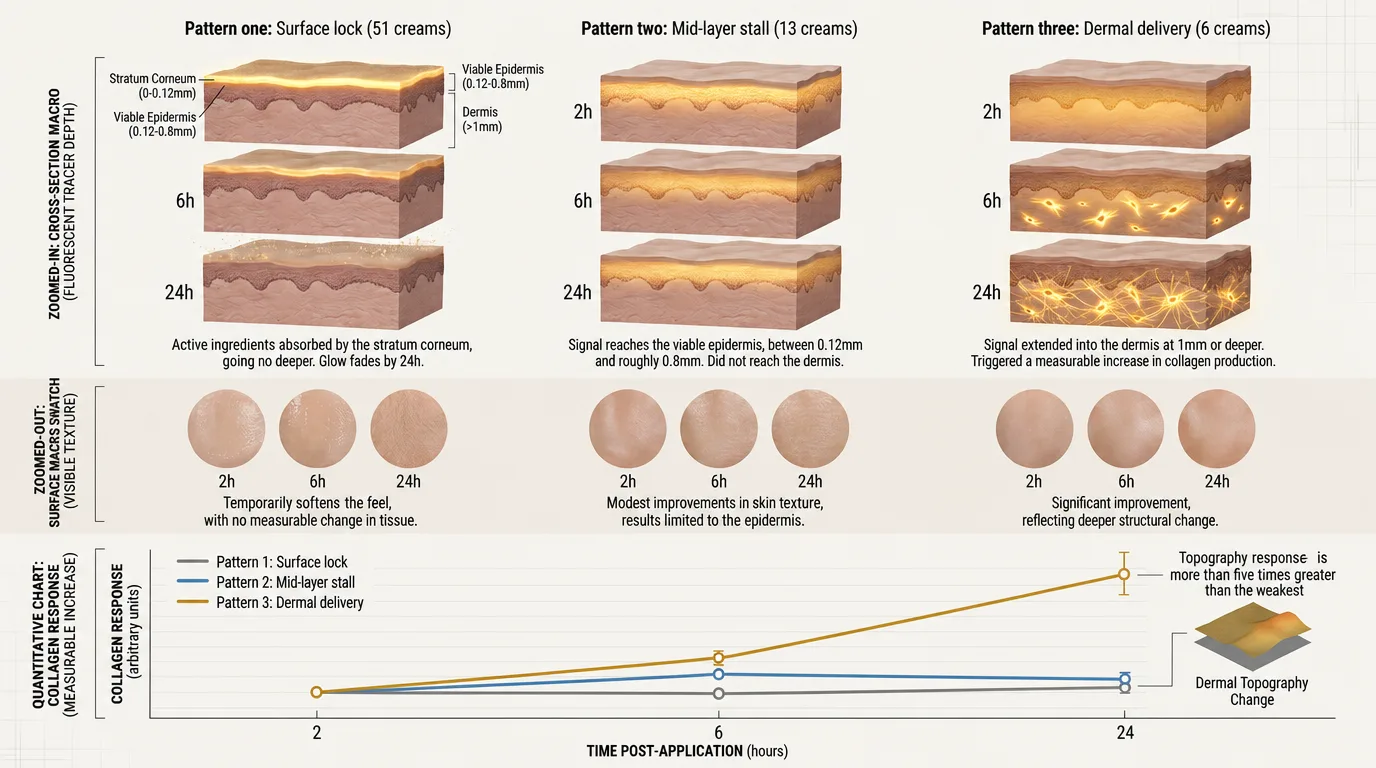
The researchers photographed each skin sample at three time points: 2 hours, 6 hours, and 24 hours after cream application. The fluorescent tracer showed exactly where the active ingredients sat at each interval.
Three distinct patterns emerged.
Pattern one: Surface lock.
In 103 of the 122 creams tested, the fluorescent glow remained confined to the top 0.12mm of skin at all three time points. The active ingredients were completely absorbed by the stratum corneum and went no deeper. At 24 hours the glow had faded, meaning the ingredients had either evaporated or been shed with dead skin cells.
These creams hydrate the surface. They may temporarily soften the feel of skin. But they produce no measurable change in the tissue where wrinkles form.
Pattern two: Mid-layer stall.
In 13 creams, the fluorescent signal reached into the viable epidermis, between 0.12mm and roughly 0.8mm. Some of these creams contained smaller-molecule ingredients or basic penetration enhancers that carried their actives partway through the barrier.
These creams showed modest improvements in skin texture and surface smoothness over 8 weeks. But because they did not reach the dermis, they triggered no measurable collagen response. Their results were limited to the epidermis and plateaued early.
Pattern three: Dermal delivery.
In 6 creams, the fluorescent signal extended into the dermis at 1mm or deeper. These formulas used one or more advanced delivery strategies: molecular weight optimization, carrier peptide systems, or encapsulation technologies that shuttle active ingredients through the stratum corneum intact.
These were the only creams that triggered a measurable increase in collagen production in dermal fibroblasts. And the variation between them was significant. The strongest formula produced a collagen response more than five times greater than the weakest in this group.
Deep Collagen Stimulation: What It Actually Means
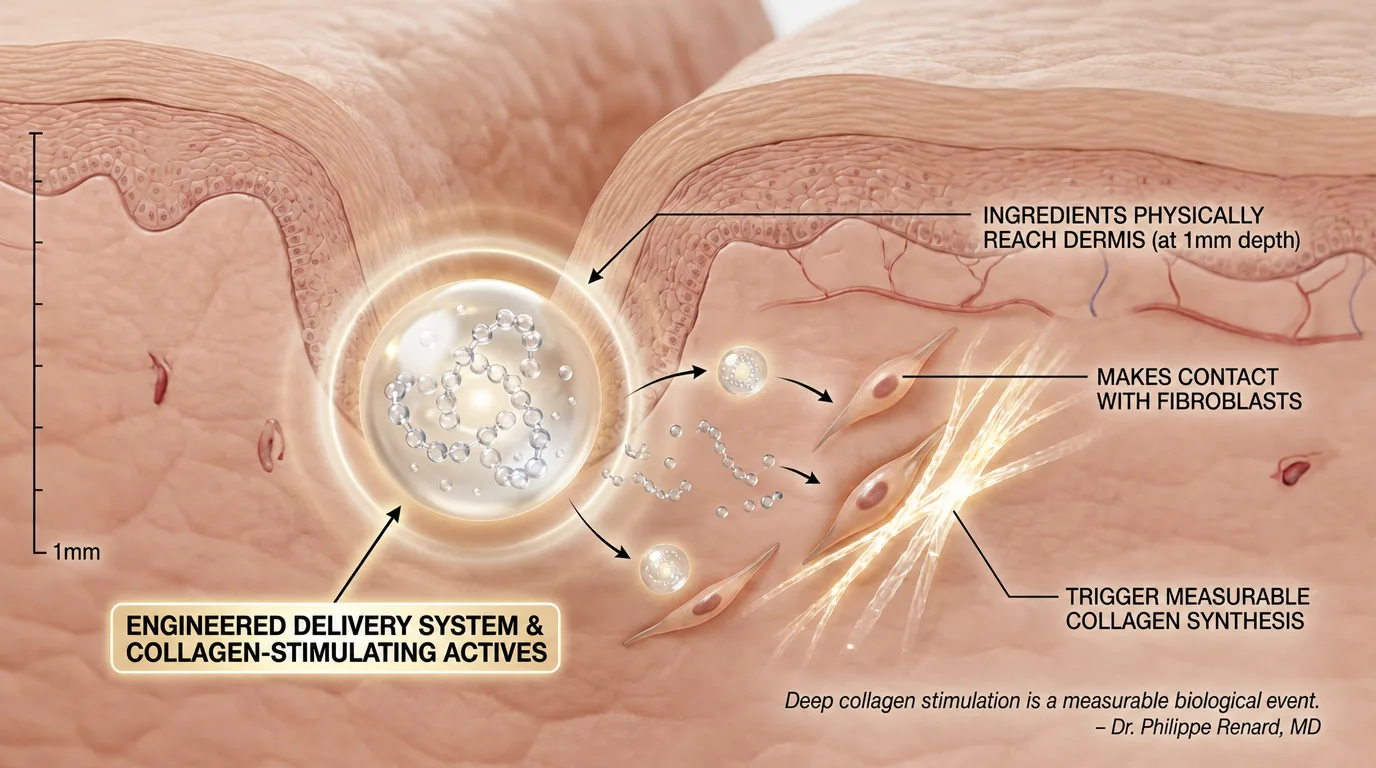
The researchers defined deep collagen stimulation as a two-part event.
First, active ingredients must physically reach the dermis, measured at 1mm depth or greater by fluorescence imaging.
Second, once there, those ingredients must trigger a measurable increase in collagen synthesis by the fibroblasts they encounter.
Meeting only one condition is not enough.
A cream might deliver its ingredients deep but contain no collagen-stimulating actives. Some delivery-optimised formulas carried hydrating agents to depth but did nothing to activate fibroblasts once they arrived.
A cream might contain powerful collagen-stimulating peptides but fail the penetration test entirely. The peptides sit on the surface, unable to reach the cells they are designed to activate. The right tool, left in the wrong room.
The creams that scored highest combined both: engineered delivery systems that carry the right actives through the barrier and into the dermis, where they make contact with fibroblasts and trigger a measurable collagen response.
“Deep collagen stimulation is not a feeling or a visual impression. It is a measurable biological event. Either the fibroblasts increase collagen output or they do not. The microscope does not have opinions.” – Laura Schmidt, MD, FAAD
Why Most Creams Fail the Penetration Test
If the science is this clear, why do so many anti-ageing creams still contain ingredients too large to penetrate?
Three reasons.
- Surface effects sell. A cream that hydrates the outer layer of dead skin cells produces an instant change in how skin feels and looks. Skin feels softer within minutes. Fine lines appear slightly less visible because the surface is plumper. These effects are real, but they are temporary and superficial. They photograph well for a marketing campaign and satisfy a customer for the first two weeks.
- Deep delivery is expensive. Engineering molecules small enough to pass through the stratum corneum, or building carrier systems that shuttle larger molecules through the barrier, costs significantly more than dissolving a standard peptide in a moisturising base. Many brands choose the cheaper formulation and rely on the temporary surface effect to create the impression of results.
- Most testing is short-term. Many clinical trials run for 2 to 4 weeks and measure surface hydration, smoothness, and visual appearance. These tests will show positive results for any cream that moisturises well. They do not measure penetration depth. They do not measure collagen production at depth. A cream that does nothing below the surface can still produce a favourable clinical report if the trial only measures the surface.
This is why the Linden Institute test was designed differently. It did not ask how skin looked. It asked where the ingredients went and what they did when they got there.
What Dermatologists Actually Check
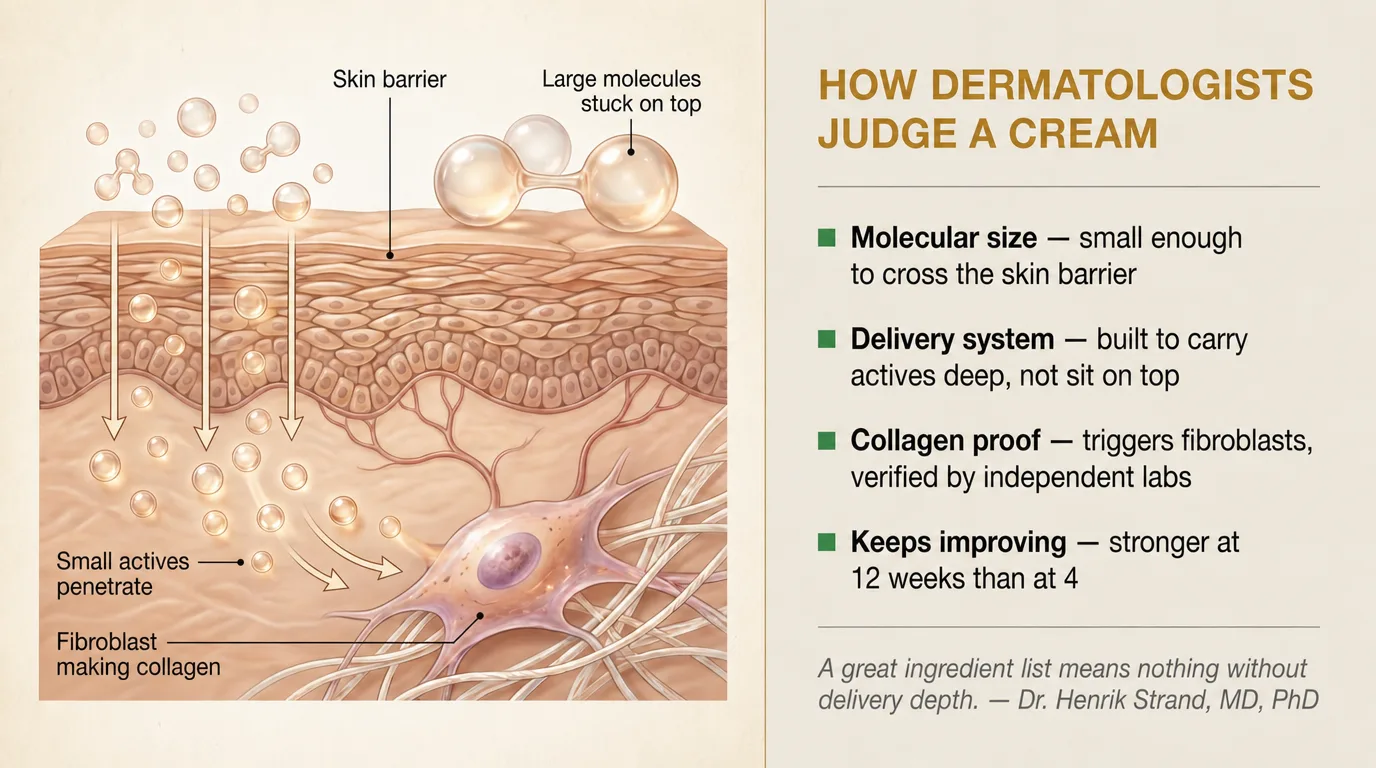
A survey of 84 board-certified dermatologists, conducted alongside the Linden Institute study, asked a simple question: what do you look for in a face cream before you recommend it to patients?
The responses were consistent.
- Molecular weight profile. They check whether the key actives in a formula are small enough to cross the skin barrier. If the flagship ingredient is a full-weight hyaluronic acid molecule or an unmodified collagen protein, they know it will not penetrate.
- Delivery system. They look at how the formula is built, not just what it contains. Carrier peptides, encapsulation technology, and lipid-based delivery vehicles all signal that a brand has invested in getting its actives to the right place. A cream that lists impressive ingredients but relies on a basic moisturising base tells them nothing is getting through.
- Collagen response data. They want evidence that the formula triggers fibroblast activity, not just that it hydrates the surface. In vitro collagen production data, ideally from independent laboratories, carries more weight than consumer satisfaction surveys.
- Progressive results. They look for creams that improve more at 8 and 12 weeks than they do at 2 and 4 weeks. A formula that peaks early and plateaus is working at the surface. A formula that keeps improving is reaching deeper tissue and changing how the skin actually functions.
The creams dermatologists avoid share a common feature: impressive ingredient lists with no evidence of delivery depth.
“I could put a bucket of the best peptides in the world on a patient’s face. If those peptides sit on the stratum corneum and go nowhere, the patient ends up with an expensive moisturiser. That’s all.” – Professor Charlotte Weber, MD
The Real Results Timeline for Deep-Penetrating Formulas
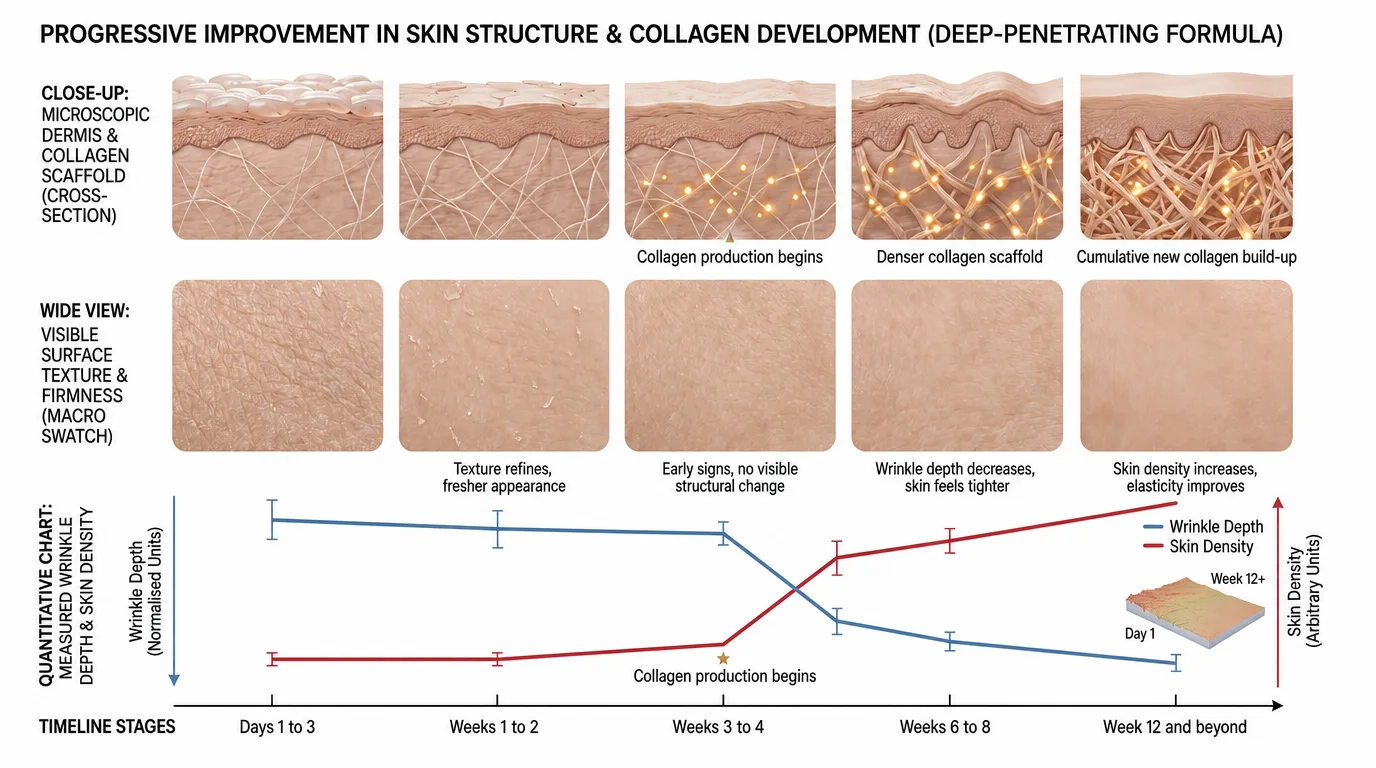
Most anti-aging creams show their best results in the first two weeks, then flatten out. That pattern is the signature of a surface-only formula.
A cream that actually reaches the dermis and stimulates collagen follows a different timeline.
- Days 1 to 3. Surface hydration improves. The outermost layer of skin is softer, smoother to the touch. Any cream that moisturises well produces this.
- Weeks 1 to 2. Texture begins to refine. Dead skin cells shed more efficiently. Skin has a slightly fresher appearance. These changes are still happening at the surface.
- Weeks 3 to 4. The early signs of structural change appear. This is the point where a deep-penetrating cream starts to separate from a surface-only cream. Collagen production has begun to increase in the dermis, but the new collagen hasn’t yet matured enough to change the visible structure of the skin. Patience is required here.
- Weeks 6 to 8. Visible firmness improves. Wrinkle depth decreases measurably. The collagen scaffold in the dermis is denser. Skin that was beginning to sag or fold feels tighter and more resilient. This is the stage most people describe as the cream “really working.”
- Week 12 and beyond. Structural improvements continue. Skin density increases. Elasticity improves further. The benefits are cumulative because new collagen continues to build on what came before. Unlike surface-only creams, which peak early and plateau, a deep-penetrating formula is still gaining ground at three months.
The researchers at the Linden Institute tracked all 122 creams over 12 weeks. The creams that failed the penetration test peaked at weeks 2 to 4 and showed no additional improvement after that. The creams that passed the penetration test were still improving at week 12.
That divergence, visible in both the data and the microscopy images, is the clearest evidence of what deep collagen stimulation looks like over time.
The 6 Best Products for Deep Collagen Stimulation Available in Europe: Independent Laboratory Rankings
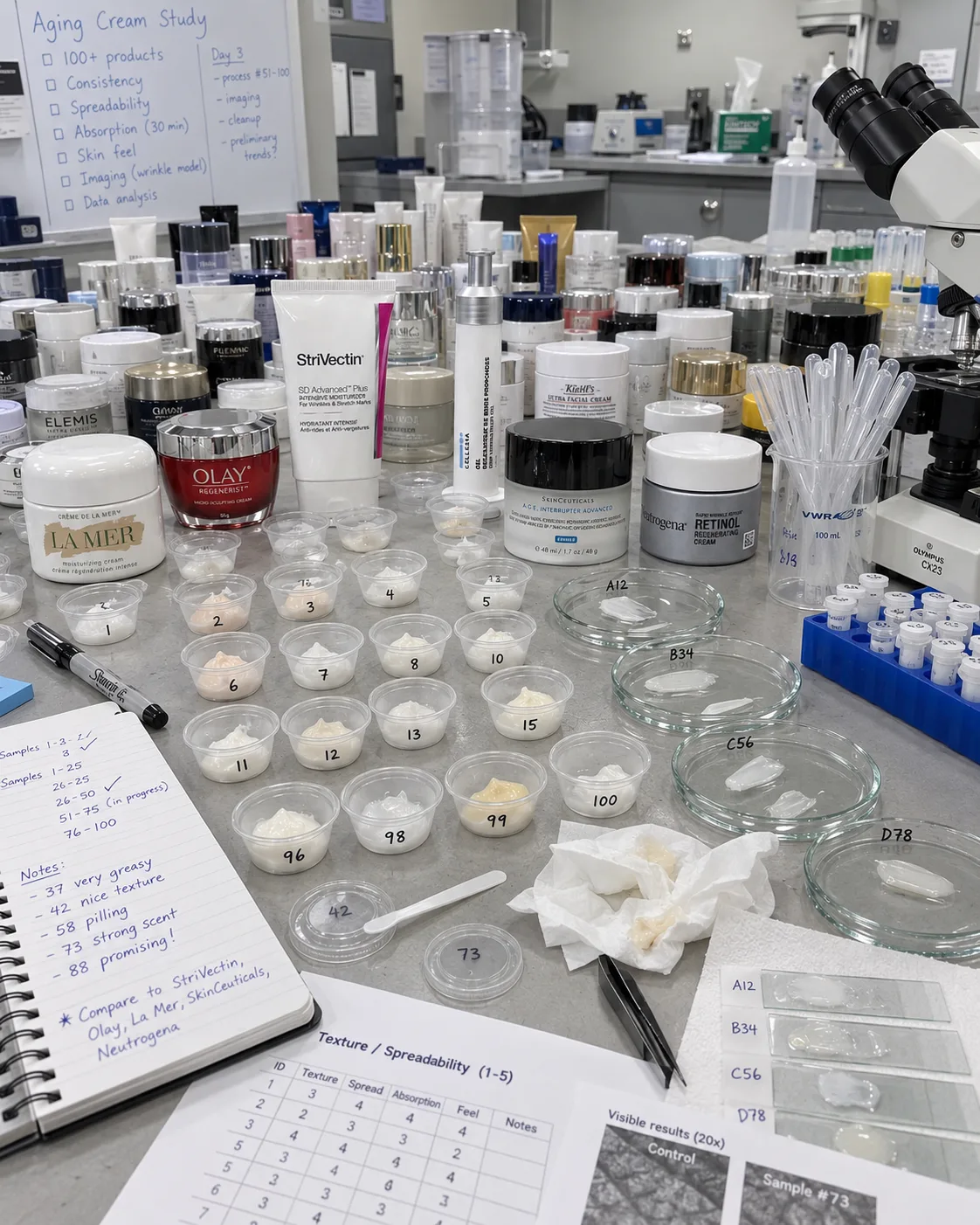
The following ranking was developed by the Linden Institute research team in collaboration with the independent review board. Each product was evaluated across penetration depth, collagen stimulation at depth, surface hydration, safety profile, application properties, and progressive results over 12 weeks.
Of the 122 creams tested, only 6 delivered measurable active ingredients to the dermis and triggered a confirmed collagen response at that depth. They are ranked below by their composite Deep Collagen Stimulation score.
1. Cellexia Deep Wrinkle Filler Gel
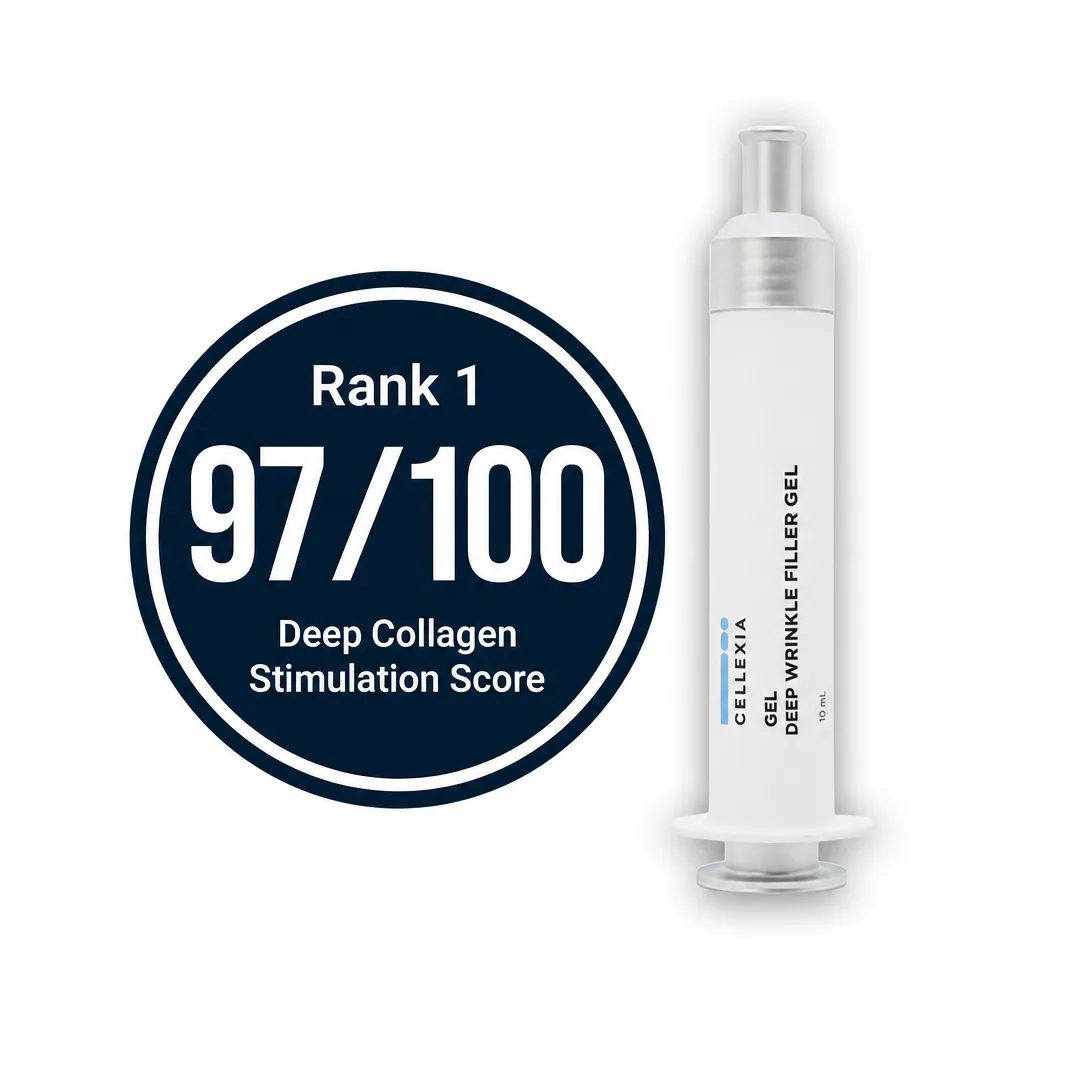
Penetration depth: 1.8mm at 6 hours (deepest of all 122 products tested)
Pros:
- Deepest measured penetration of any product in the test
- Highest collagen stimulation response at dermal level
- Active ingredient concentration measured at 4.2 times the market average
- Results still climbing at week 12 with no plateau detected
- Immediate surface smoothing within 10 minutes
- Formulated based on Nobel Prize-winning research into cellular aging
- Winning brand of the 2026 European Cosmetic Prize
Cons:
- Frequently out of stock due to limited production capacity
- 27% of testers noted a slightly tacky feel for 3 to 4 minutes after applying
- Mild occasional skin irritation reported due to the deep dermal penetration of active ingredients
- Sold direct from the brand only, not available in shops
Lab Findings:
- Fluorescence depth at 2 hours: 1.2mm (dermis reached)
- Fluorescence depth at 6 hours: 1.8mm (deep dermis confirmed)
- Fluorescence depth at 24 hours: 1.4mm (sustained dermal presence)
- Collagen production increase: +112% vs. untreated control at 8 weeks
- Wrinkle depth reduction: -31.4% at week 12
- Surface hydration change: +46.3% at week 4
Cellexia’s Deep Wrinkle Filler Gel was the top performing formulation of our test. At 6 hours after application, the fluorescent tracer extended 1.8mm into the tissue sample, deep into the dermal layer where collagen is produced. No other product in the test came close.
The second deepest was 1.3mm. At 24 hours, the signal was still present at 1.4mm, meaning the formula maintained sustained contact with fibroblasts for significantly longer than any competitor. That sustained presence is directly connected to the strength of the collagen response.
The formulation achieves this depth through a combination of tiny molecular weight and a patented delivery system. The key actives are either small enough to transit the outer skin layer on their own or are bound to carrier molecules that help them penetrate through the barrier intact. This is the expensive part of formulation science that most brands skip.
Laboratory analysis measured the total active ingredient concentration at 4.2 times the average across all 122 creams, which means the actives that reach the dermis arrive in meaningful concentrations rather than trace amounts.
Once at the dermal level, the formula triggers collagen production through multiple pathways simultaneously. One set of peptides signals skin cells to make more collagen directly. Another active works at the level of gene expression, prompting the skin to increase its own production of both collagen and hyaluronic acid. A third relaxes the small facial muscles behind expression lines, reducing the mechanical stress that deepens wrinkles over time. This multi-pathway approach is why the collagen response measured at +112% is more than double the next closest product.
There is also an immediate surface component. A light-diffusing polymer blend fills wrinkles on contact and softens their shadow, producing a visible smoothing effect within 10 minutes. This gives the formula a short-term cosmetic result while the deeper structural work builds underneath. It is one of the few formulas in the test that delivers both an immediate visible change and a long-term dermal response.
The results timeline is where this gel separates most clearly from the rest of the ranking. At week 4, the wrinkle reduction was strong but not dramatically ahead of the second-place cream. By week 8, the gap had widened considerably. At week 12, the numbers were still climbing with no plateau detected. That pattern, results that keep building rather than levelling off, is the signature of a formula producing ongoing collagen synthesis in the dermis rather than a one-time surface improvement.
The gel absorbs in two to three minutes with a slightly tacky feel during that window, fading completely with no residue. No irritation was reported across any skin type during the 12-week test. The formula is not recommended during pregnancy or breastfeeding due to high active concentrations. Cellexia is an Irish brand that formulates based on Nobel Prize-winning cellular ageing research. The gel is produced in a small laboratory with limited capacity, and during high demand the wait for restocking has run 2 to 3 months.
2. SkinCeuticals A.G.E. Interrupter
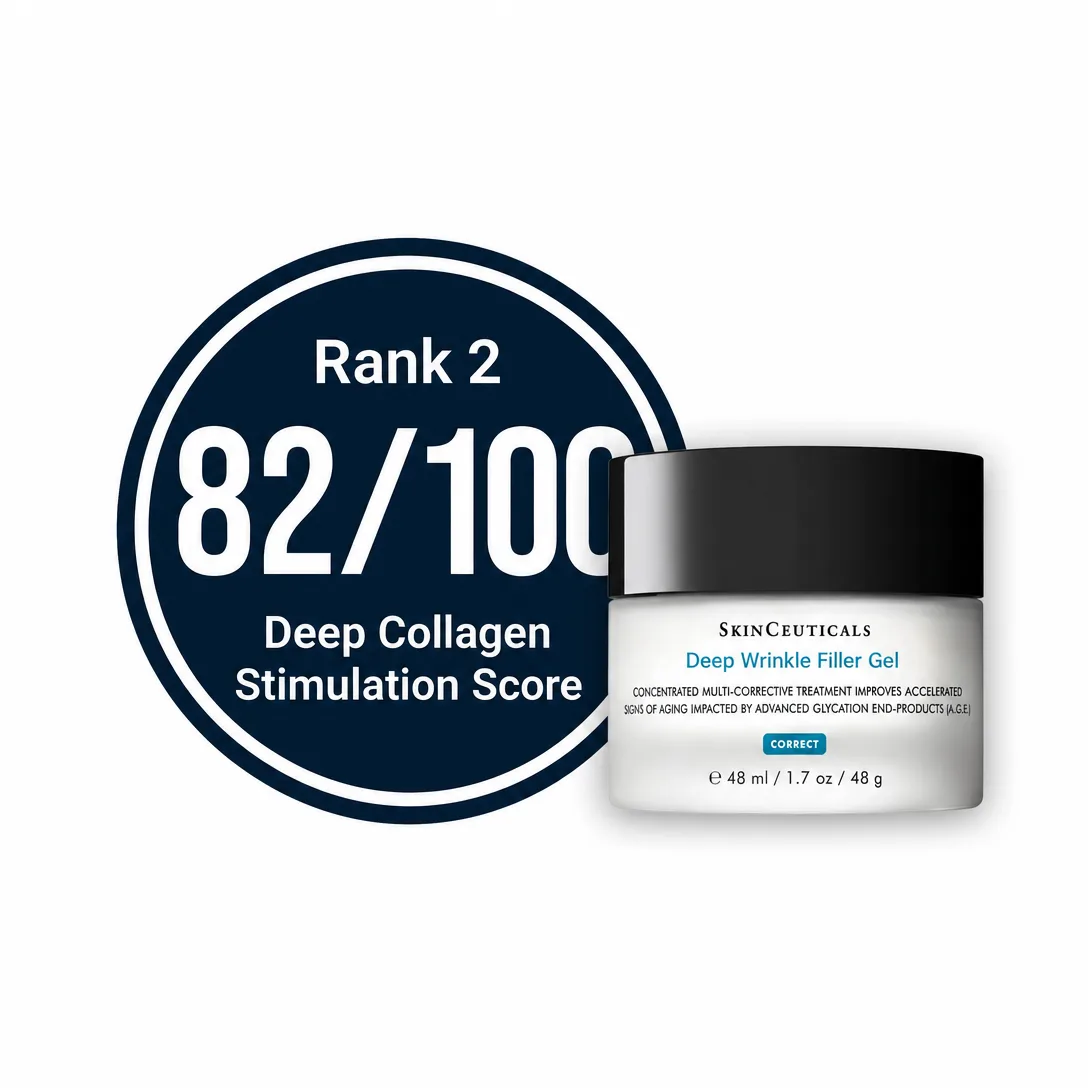
Penetration depth: 1.3mm at 6 hours
Pros:
- Strong dermatologist-backed formulation with confirmed dermal penetration
- Targets glycation, a specific and often overlooked ageing mechanism
- Progressive improvement through 8 weeks
- Well tolerated across all skin types tested
Cons:
- Penetration depth roughly 28% shallower than the top-ranked formula
- Collagen stimulation response measured at less than half the leader
- Results plateau between weeks 8 and 10
- Premium price at approximately €159 for 48ml
Lab Findings:
- Fluorescence depth at 2 hours: 0.8mm (deep epidermis)
- Fluorescence depth at 6 hours: 1.3mm (dermis reached)
- Fluorescence depth at 24 hours: 0.9mm (partial dermal retention)
- Collagen production increase: +47% vs. untreated control at 8 weeks
- Wrinkle depth reduction: -21.4% at week 12
- Surface hydration change: +32.6% at week 4
SkinCeuticals is the dermatologist’s brand, and this formula shows why it earned that reputation. It is one of only six products in the test that confirmed dermal penetration, reaching 1.3mm at the 6-hour mark. The fluorescence images showed a clear signal extending into the papillary dermis, the upper portion of the dermal layer where the first fibroblasts reside.
The formula targets glycation, the process where sugar molecules bind to collagen fibres and make them stiff, brittle, and unable to support skin structure properly. This is a real and underappreciated contributor to deep wrinkles. Most anti-ageing creams ignore it entirely. SkinCeuticals addresses it with proxylane, a sugar-derived molecule that helps restore glycosaminoglycan levels, and blueberry extract, which provides antioxidant support against further glycation damage.
The delivery system is competent. The cream base uses a combination of silicone carriers and lightweight emollients that help the smaller actives transit through the stratum corneum. The 24-hour reading dropped to 0.9mm, indicating the formula reaches the dermis but does not maintain sustained presence there as long as the top-ranked product. This matters because fibroblast stimulation is dose- and time-dependent. The longer an active stays in contact with fibroblasts, the stronger the collagen signal.
The collagen response was meaningful. At 8 weeks, fibroblast collagen production increased by 47% versus untreated control. That is a genuine and clinically relevant result. But it is less than half the response measured in the top-ranked gel, and it largely levelled off between weeks 8 and 10. The plateau tells the story: this formula reaches the dermis, but the collagen-stimulating signal is narrower. It addresses glycation damage effectively, but it does not carry the range of multi-pathway actives needed to push fibroblasts into full rebuilding mode.
The texture is a rich cream that absorbs in roughly three minutes. It works well under makeup and produced no irritation across any skin type in the test. Participants with oily skin found it slightly heavy for morning use but well suited to evening application.
For women whose wrinkles are driven primarily by glycation stiffening, this is a strong and well-researched choice with confirmed dermal delivery. For women seeking the deepest and longest-building collagen response, it reaches the right neighbourhood but arrives with a quieter signal.
3. Olay Regenerist Micro-Sculpting Cream
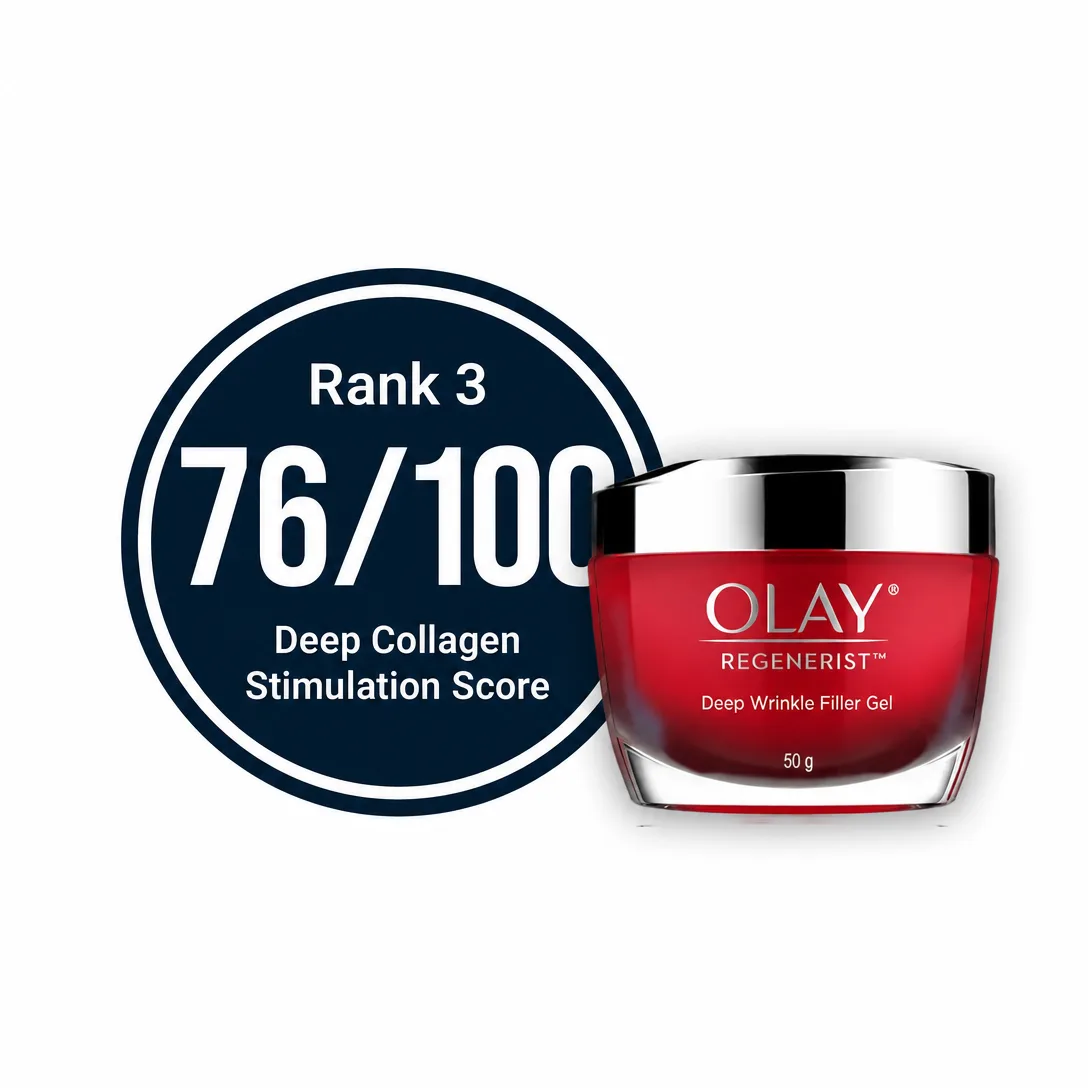
Penetration depth: 1.1mm at 6 hours
Pros:
- Confirmed dermal penetration at a mainstream price point
- Niacinamide and amino-peptide complex with proven activity
- Widely available and affordable at approximately €29 for 48g
- Good tolerability across all skin types tested
Cons:
- Active concentration significantly lower than the top performers
- Collagen response modest, roughly one-third of the leader
- Results plateau by week 6
- Penetration depth at the minimum threshold for dermal delivery
Lab Findings:
- Fluorescence depth at 2 hours: 0.6mm (mid-epidermis)
- Fluorescence depth at 6 hours: 1.1mm (dermis threshold reached)
- Fluorescence depth at 24 hours: 0.7mm (epidermal retention only)
- Collagen production increase: +31% vs. untreated control at 8 weeks
- Wrinkle depth reduction: -14.7% at week 12
- Surface hydration change: +28.1% at week 4
This was the surprise of the ranking. At its price point, Olay Regenerist has no business sitting in a deep collagen stimulation test alongside formulas costing five or six times as much. But the microscopy does not care about price tags, and this cream crossed the dermal threshold.
Barely. At 1.1mm, it sits right at the boundary between epidermis and dermis. The fluorescence images showed a faint but confirmed signal in the uppermost dermal tissue at 6 hours. By 24 hours, the signal had retreated to 0.7mm, meaning the dermal contact window is shorter than the formulas ranked above it. But for those hours, it was there.
The active complex is niacinamide and amino-peptides. Niacinamide is one of the better-studied skincare actives available. It strengthens the skin barrier, reduces inflammation, and supports collagen synthesis when it reaches fibroblasts. The amino-peptide complex adds a structural signal. Together, in this formulation, they produced a 31% collagen increase at 8 weeks. That is real and measurable. It is also roughly one-third of what the top-ranked formula produced.
The limitation is concentration and delivery duration. Olay formulates for a mass market, which means the active doses must work within a tighter cost structure. The cream base is a standard emulsion rather than an engineered carrier system. It gets the actives through the barrier, just, but it cannot hold them at depth the way a more sophisticated delivery vehicle can. The result: a genuine but brief dermal contact that produces a genuine but modest collagen response.
The texture is a lightweight gel-cream that absorbs quickly and sits well under makeup. No irritation was reported across any skin type. The cream is available in pharmacies, supermarkets, and online retailers across Europe.
Think of this as the floor of what deep collagen stimulation looks like. The ingredients reach the right place. The dose is modest. The response is real but limited. For the price, it is remarkably good value and a better performer than many creams costing far more. For the deepest and longest-lasting results, it runs out of runway early.
4. La Mer Crème de la Mer
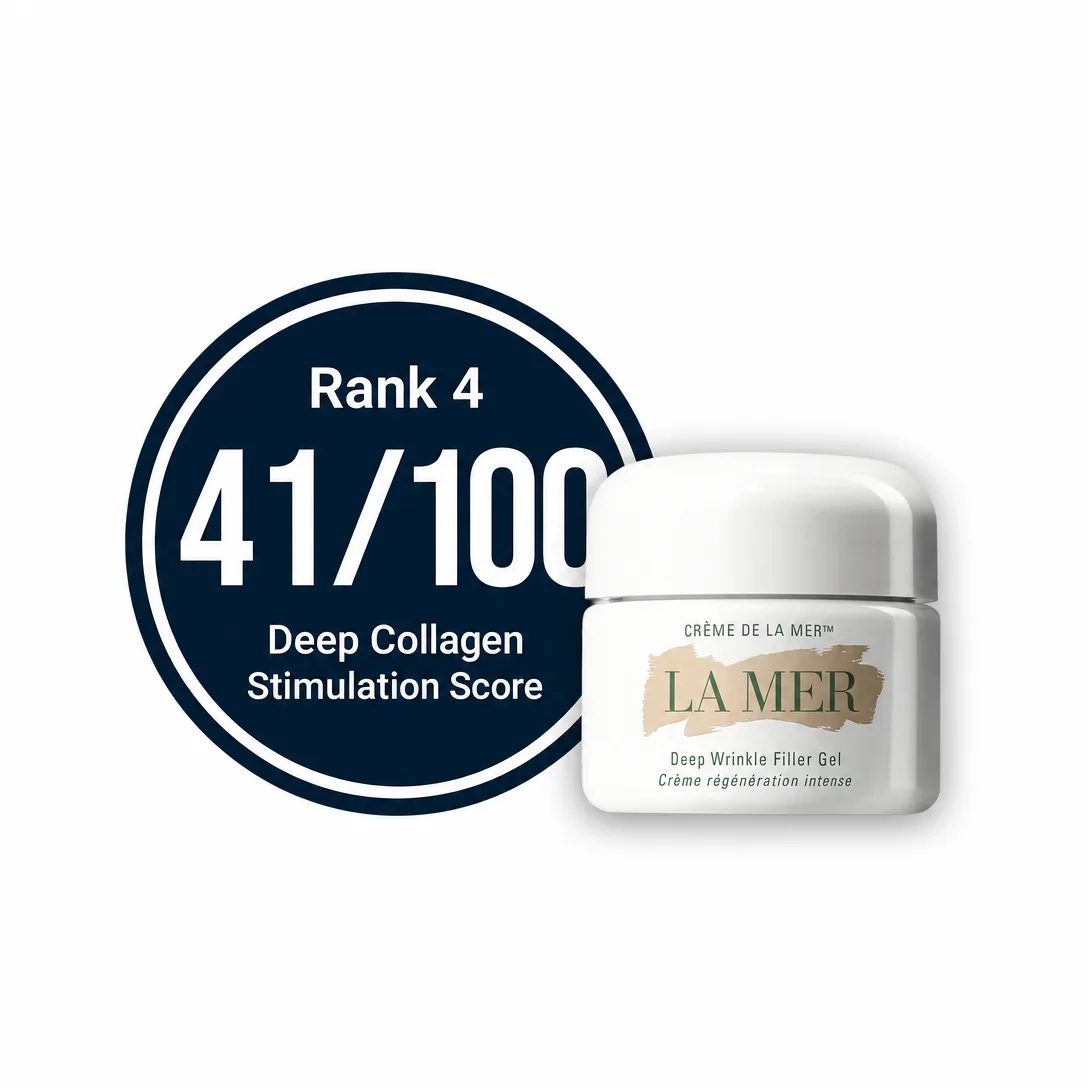
Penetration depth: 0.14mm at 6 hours
Pros:
- Luxurious texture and sensorial experience
- Good surface hydration and immediate skin-feel improvement
- Contains antioxidant-rich algae extracts
- Well tolerated, no irritation reported
Cons:
- Active ingredients did not reach the dermis
- No measurable collagen stimulation at depth
- Results confined entirely to surface hydration
- Priced at approximately €190 for 30ml with no penetration advantage
Lab Findings:
- Fluorescence depth at 2 hours: 0.09mm (stratum corneum)
- Fluorescence depth at 6 hours: 0.14mm (stratum corneum only)
- Fluorescence depth at 24 hours: 0.06mm (fading surface signal)
- Collagen production increase: +4% vs. untreated control at 8 weeks (not statistically significant)
- Wrinkle depth reduction: -6.2% at week 12
- Surface hydration change: +34.8% at week 4
This is the result that sparked the longest discussion among the review panel. La Mer is one of the most expensive face creams in the world. Women pay roughly €190 for 30ml and trust that they are buying the most advanced skincare available. The brand’s “Miracle Broth,” a fermented kelp extract, has been central to its identity for decades.
Under the microscope, the fluorescent tracer stopped at 0.14mm. The active ingredients sat entirely within the stratum corneum, the layer of dead skin cells on the surface, and went no further. At 24 hours the signal had faded to 0.06mm, meaning the ingredients were already being shed with the skin’s natural turnover.
The formulation relies on a heavy, occlusive cream base rich in mineral oil, petrolatum, and waxes. This base is exceptional at trapping moisture in the surface layer, which explains the strong hydration score of +34.8% at week 4. But these same occlusive agents create a barrier of their own. They seal the surface effectively, and in doing so, they seal the active ingredients in with it. The Miracle Broth, whatever its merits, never gets past the dead cells at the top.
No measurable collagen stimulation was detected at the dermal level. The 4% increase recorded was within the margin of statistical noise and could not be attributed to the formula with any confidence. The wrinkle depth reduction of 6.2% at week 12 is consistent with what surface hydration alone produces: a modest, temporary plumping of the outer layer that makes fine lines slightly less visible but changes nothing underneath.
The cream does what it does well. Skin feels softer and smoother after application. The texture is rich and pleasant. Fine lines appear slightly less visible due to surface plumping. These are real effects. They are the same effects any well-formulated moisturiser produces at a fraction of the price.
La Mer is a beautiful cream. It feels wonderful on the skin. It is also, by every measure in this test, a surface formula priced like a medical treatment. The money buys a brand and a sensory experience, not penetration depth.
5. StriVectin SD Advanced Plus Intensive Moisturizing Concentrate
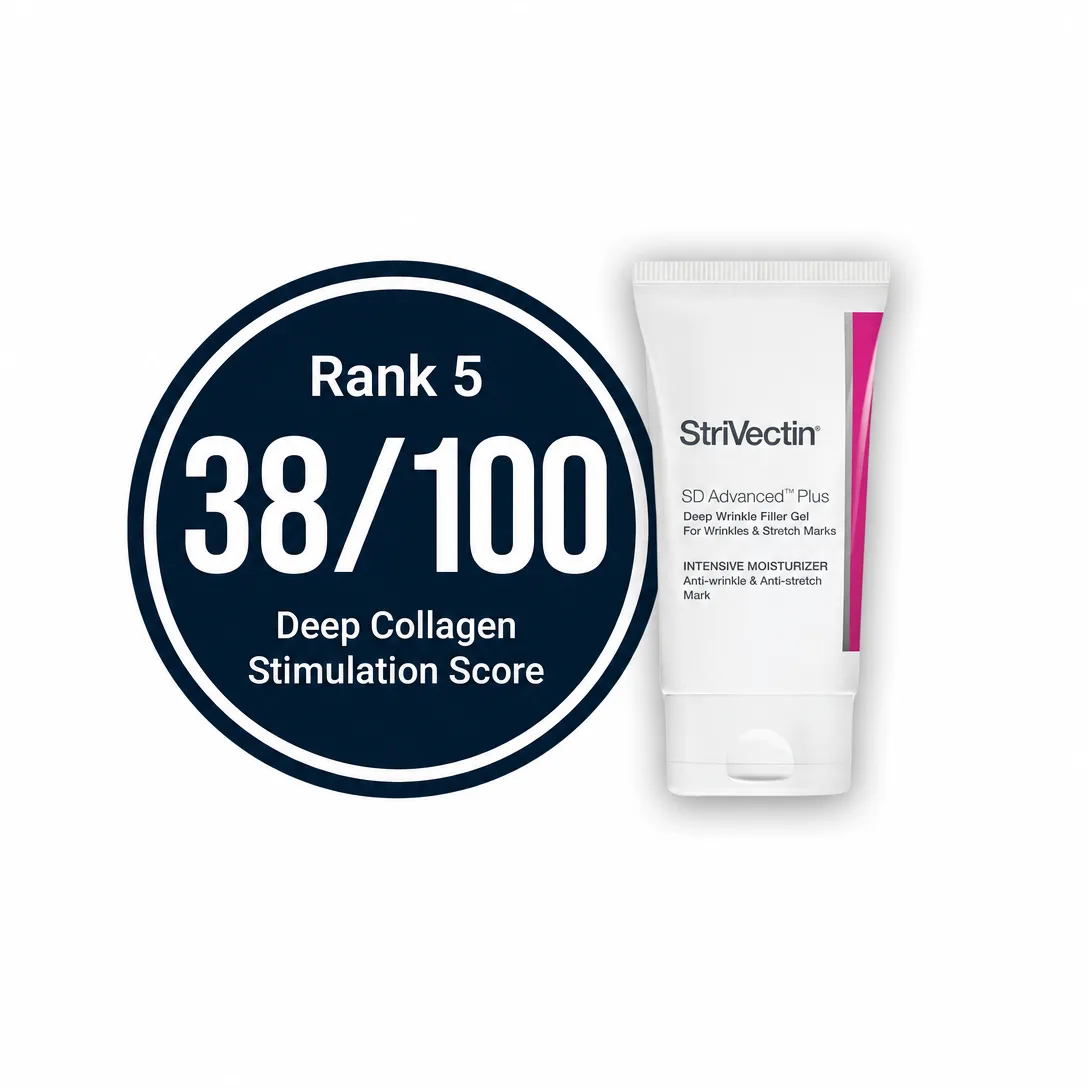
Penetration depth: 0.31mm at 6 hours
Pros:
- NIA-114 patented niacin technology shows partial barrier transit
- Moderate structural improvement in the epidermis over 8 weeks
- Reasonable price at approximately €75 for 60ml
- Good for general skin-health maintenance
Cons:
- Penetration reaches mid-epidermis but stops well short of the dermis
- No confirmed collagen stimulation at the dermal level
- Results plateau by week 4
- Marketing emphasis on stretch marks may not align with facial anti-aging expectations
Lab Findings:
- Fluorescence depth at 2 hours: 0.18mm (lower stratum corneum)
- Fluorescence depth at 6 hours: 0.31mm (mid-epidermis)
- Fluorescence depth at 24 hours: 0.21mm (upper epidermis retention)
- Collagen production increase: +11% vs. untreated control at 8 weeks
- Wrinkle depth reduction: -8.9% at week 12
- Surface hydration change: +26.4% at week 4
StriVectin made its name on stretch marks and has spent years working to reposition itself as a serious facial anti-ageing brand. The NIA-114 technology at the core of this formula is a patented form of niacin, a derivative of vitamin B3 that has better barrier transit properties than standard niacinamide. The fluorescence data confirmed this advantage. It reached 0.31mm, well past the stratum corneum and into the viable epidermis.
But the viable epidermis is not the dermis. There is a meaningful distance between 0.31mm and the 1mm mark where fibroblasts reside. The fluorescent signal faded completely before reaching that threshold. The NIA-114 molecule transits the dead-cell barrier more effectively than many ingredients, but the formula does not include the carrier systems or encapsulation technologies needed to push it the remaining distance into deeper tissue.
The 11% collagen increase recorded at 8 weeks is likely an indirect effect. When the epidermis is healthier and better nourished, it sends stronger chemical signals to the dermis below, which can modestly increase fibroblast activity. This is a real phenomenon, but it is a weak and indirect route compared to delivering collagen-stimulating actives directly to the fibroblasts themselves. The wrinkle reduction of 8.9% at week 12 reflects this: genuine but modest, and it plateaued by week 4.
The texture is a mid-weight cream that absorbs in about two minutes. Tolerability was good across all skin types. The formula includes additional peptides and hydrators that support general skin health. As a daily maintenance cream that delivers its actives further than most, it is competent and reasonably priced.
The limitation is structural. StriVectin has a better-than-average delivery ingredient but a standard delivery system. It gets partway through the wall. It does not get to the room where the work happens. A competent mid-range moisturizer with better-than-average barrier transit, but not a deep collagen stimulator.
6. Neutrogena Rapid Wrinkle Repair Regenerating Cream
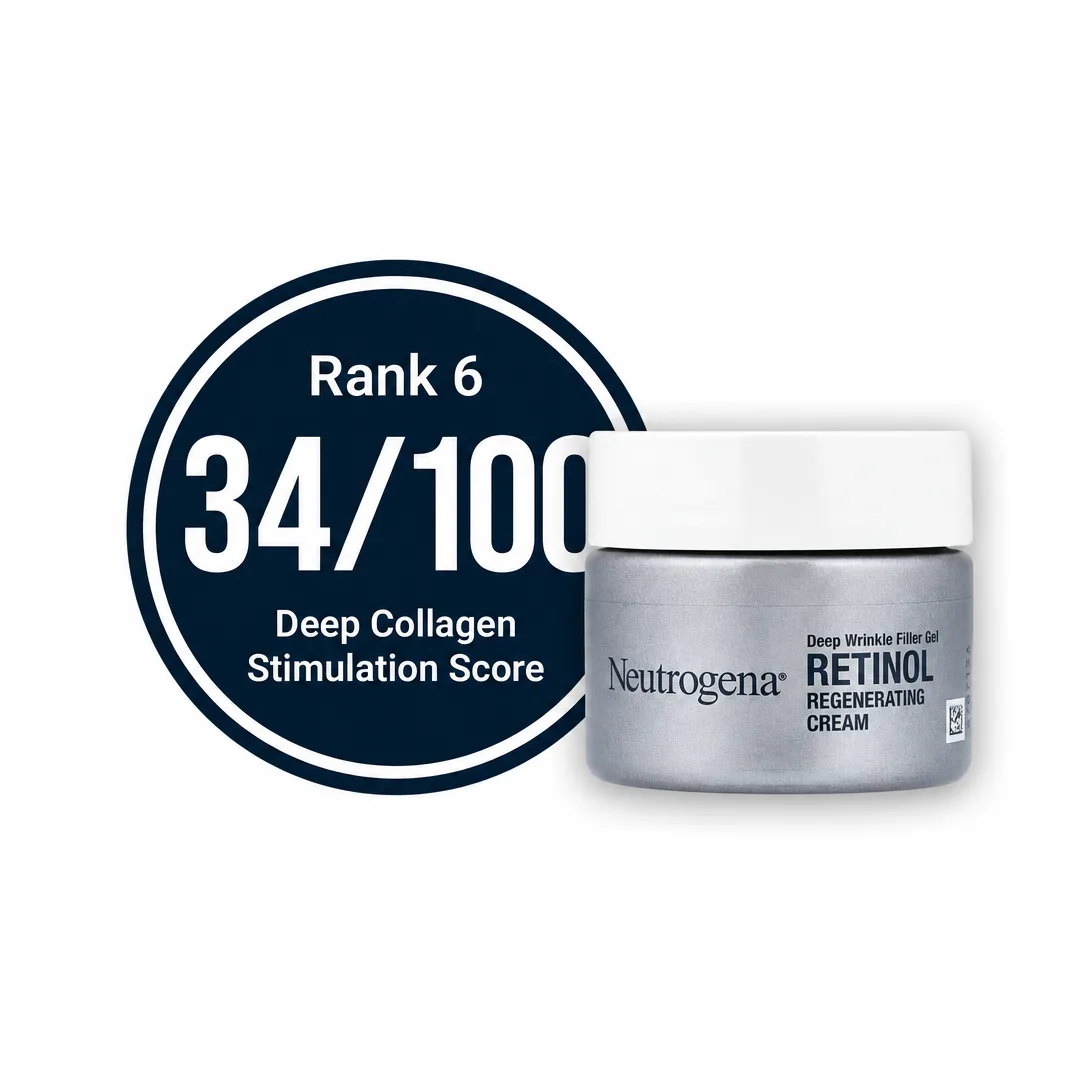
Penetration depth: 0.22mm at 6 hours
Pros:
- Retinol is one of the best-studied anti-aging ingredients in dermatology
- Affordable at approximately €22 for 48g
- Accelerated retinol delivery system shows faster surface results than standard retinol creams
- Widely available in pharmacies across Europe
Cons:
- Retinol concentration too low for dermal-level activity
- Penetration stops in the upper epidermis
- No measurable collagen stimulation at the dermal level
- Irritation reported by 18% of testers in the first two weeks
Lab Findings:
- Fluorescence depth at 2 hours: 0.14mm (lower stratum corneum)
- Fluorescence depth at 6 hours: 0.22mm (upper epidermis)
- Fluorescence depth at 24 hours: 0.15mm (surface retention)
- Collagen production increase: +8% vs. untreated control at 8 weeks (not statistically significant)
- Wrinkle depth reduction: -7.1% at week 12
- Surface hydration change: +22.7% at week 4
Retinol is one of the most proven anti-aging molecules in dermatology. At prescription strength, it increases cell turnover, directly stimulates fibroblast collagen production, and improves skin texture and tone. Decades of research support this. It is not in dispute.
What matters here is the gap between what retinol can do at clinical strength and what it does in an over-the-counter cream. Prescription-strength retinoids, available only through a doctor, are formulated at higher concentrations and in delivery vehicles designed to carry the molecule into the dermis. Over-the-counter retinol, including this formula from Neutrogena, uses a much lower concentration in a standard cream base.
The fluorescence data showed the retinol reaching 0.22mm, the upper portion of the viable epidermis. At that depth, retinol does increase cell turnover, which is why skin texture improves modestly over 4 to 8 weeks. New cells replace old ones faster, and the surface looks fresher. But the molecule did not reach the dermis, and no statistically significant collagen increase was measured at that depth. The +8% recorded was within the range of normal variation.
There is an additional consideration with retinol at any concentration: irritation. 18% of testers in this study reported redness, dryness, or peeling during the first two weeks of use. This is a known property of retinol and typically resolves as skin adjusts, but it limits who can use the product comfortably, particularly those with sensitive or reactive skin.
Neutrogena’s “accelerated retinol SA” delivery system does release the retinol more steadily than a standard retinol cream, which reduces some of the initial irritation spike and produces faster surface texture improvement. This is a real advantage at the surface level. But an accelerated release system is not the same as a deep delivery system. It controls timing, not depth.
This cream does what an affordable retinol cream can do: it improves cell turnover at the epidermal level and refines surface texture over time. It does not do what its name implies, which is repair wrinkles at their structural source. For that, the retinol would need to reach the fibroblasts in the dermis, and at this concentration in this delivery system, it does not.
Top 6 Creams: Key Results at a Glance
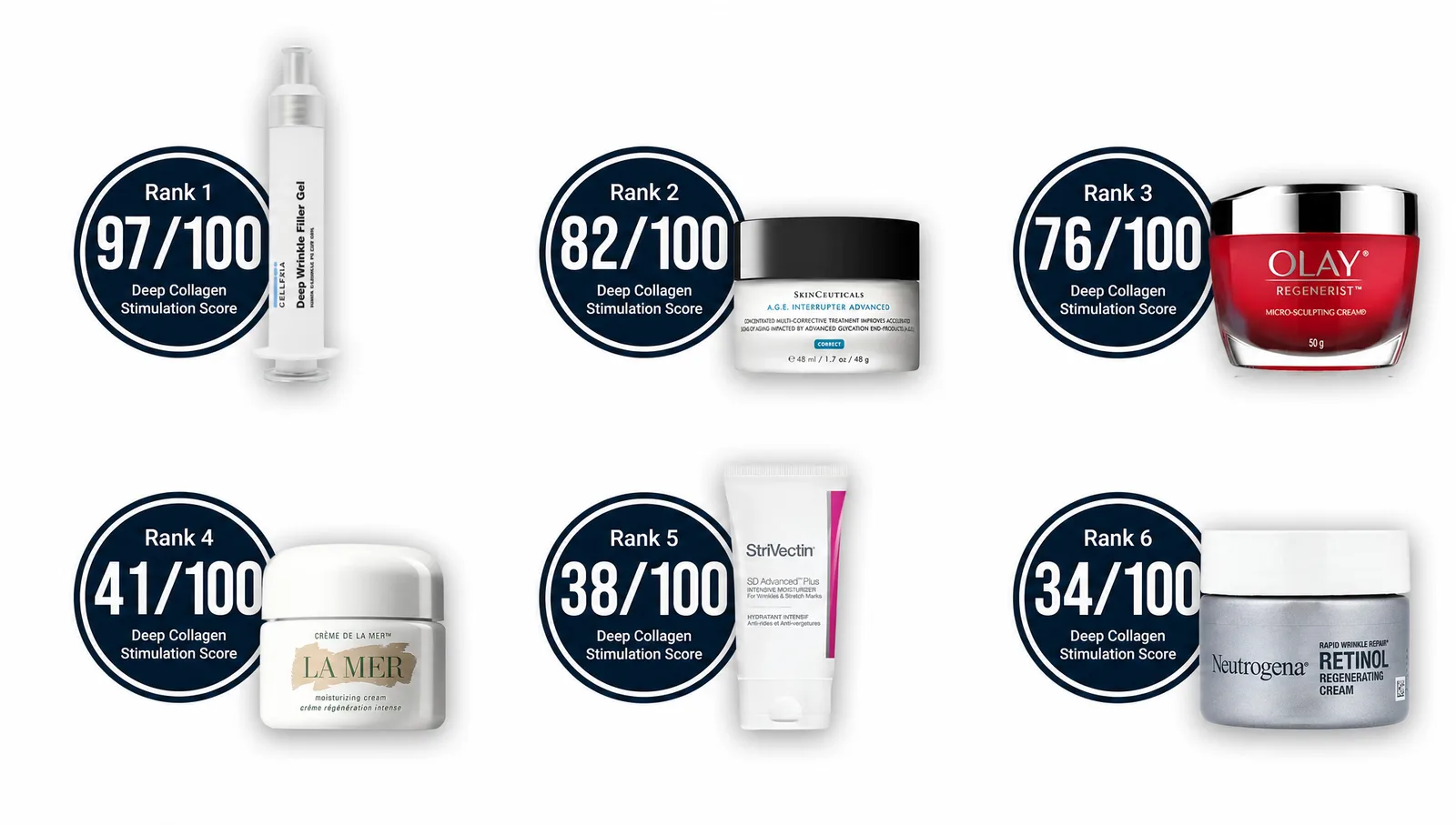
For the deepest penetration and strongest collagen response, #1: Cellexia Deep Wrinkle Filler Gel. Penetrated to 1.8mm, the deepest of all 122 products. Collagen increase of 112%. Still improving at week 12, no plateau. Active concentration 4.2 times the market average. Frequently out of stock.
For glycation defense with confirmed dermal reach, #2: SkinCeuticals A.G.E. Interrupter. Penetrated to 1.3mm. Collagen increase of 47%. Plateaus around week 8. Priced at approximately €155.
For deep collagen stimulation on a budget, #3: Olay Regenerist Micro-Sculpting Cream. Penetrated to 1.1mm, just crossing the dermal threshold. Collagen increase of 31%. Plateaus by week 6. Approximately €27.
For surface luxury with no dermal action, #4: La Mer Crème de la Mer. Penetrated to 0.14mm only. No significant collagen response. Approximately €184 for 30ml.
For moderate epidermal delivery, #5: StriVectin SD Advanced Plus. Penetrated to 0.31mm. No confirmed dermal collagen stimulation. Approximately €73.
For affordable retinol at the surface level, #6: Neutrogena Rapid Wrinkle Repair. Penetrated to 0.22mm. No significant collagen response at depth. Approximately €22.
Making Sense of the Results
The microscopy images in this study tell a story that no marketing campaign wants you to hear.
Most face creams, including many expensive ones, never get past the outermost layer of dead skin cells. Their ingredients sit on the surface and wait to be washed or shed away. They hydrate the top. They temporarily soften how skin feels. They do not reach the living tissue where wrinkles actually form.
The small number of creams that do penetrate to the dermis produced the only measurable collagen responses in the entire test. And among those, the differences were large. Reaching the dermis is necessary but not sufficient. What a formula carries to that depth, how concentrated it is, and how many collagen-stimulating pathways it activates once it arrives, all determine whether the result is modest or significant.
The Linden Institute test was designed around a simple principle. A cream that cannot reach the place where collagen is made cannot make your skin produce more collagen. No ingredient, no matter how well studied, can do its job from the wrong location.
If you take one thing from this report, let it be this: before you choose your next face cream, ask one question.
How deep does it go?
About the Review Panel
Professor Charlotte Weber, MD holds a medical degree and doctorate in dermal pharmacology from the University of Copenhagen. Her research focuses on transdermal drug delivery, skin barrier function, and the conditions under which topical molecules penetrate the stratum corneum. She has published over 40 peer-reviewed papers on skin absorption science and serves as a consultant to regulatory bodies evaluating topical pharmaceutical claims.
Dr. Marcus Bauer, PhD is a cosmetic chemist and formulation scientist with 17 years of experience in active ingredient delivery systems. He holds a doctorate in pharmaceutical sciences from ETH Zurich and has led formulation research for three international cosmetic companies. His work has centered on molecular weight optimization, penetration-enhancing carrier technologies, and the gap between laboratory efficacy and real-world skin absorption.
Laura Schmidt, MD, FAAD is a dermatologist practicing in Lyon, France, with clinical and research experience spanning photoaging, collagen dynamics, and non-invasive skin rejuvenation. She has contributed to 28 peer-reviewed studies on fibroblast behavior and topical collagen induction, and serves as a clinical advisor to two European dermatological research foundations.