A panel of independent dermatologists tested 128 products across 47 brands. One formula outperformed everything else — proving 4x more potent than vitamin C and 60x more efficient than kojic acid at correcting skin tone.
DERMATOLOGICAL SCIENCE REVIEW | COMPARATIVE ANALYSIS
Reviewed for scientific accuracy by Dr. E. Hartmann, board-certified dermatologist, and Dr. M. Lefèvre, cosmetic biologist.
Your skin produces two kinds of pigment. One is light. One is dark. And after 40, something quietly shifts the balance between them.
Most people have never heard this. The skincare industry has spent decades focused on a different question entirely — how to reduce total melanin output. Block the enzyme that makes it. Fade the spots already there. That framework has driven almost every brightening product ever formulated, from the first kojic acid cream to the most sophisticated vitamin C serum on the market today.
But researchers studying pigmentation at the cellular level have been asking a more precise question for years. It is not just how much melanin your skin produces. It is which kind — and why that ratio changes so dramatically as you age.
The answer to that question turns out to explain almost everything about why dark spots form, deepen, and resist treatment in ways that most brightening products were simply never designed to address.
A panel of board-certified dermatologists ran the most comprehensive comparative evaluation of dark spot treatments conducted this decade — 128 products across 47 brands, including La Roche-Posay, SkinCeuticals, Murad, Cellexia, Paula’s Choice, The Ordinary, and others. Every product was evaluated using spectrometry, VISIA imaging, and melanin quantification. No consumer surveys. No self-reported results. Skin data only.
The findings were decisive. And the most significant one had nothing to do with which ingredient was most potent. It had to do with which biological question most products had never thought to ask.
“These are among the most significant comparative results we’ve seen in pigmentation correction in the last decade,” says Dr. A. Krämer, head of cosmetic dermatology research at the University of Heidelberg. “The separation between the top-ranked formula and the rest of the field was not marginal. It was substantial.”
Here are the top five most effective products that made the final list — and the science behind the single most overlooked pathway driving dark spots after 40.
This article has been reviewed and fact-checked by Dr. E. Hartmann, board-certified dermatologist; Dr. A. Krämer, head of cosmetic dermatology research, University of Heidelberg; and Dr. S. Moreira, clinical dermatologist specialising in pigmentation disorders, University of Lisbon.
The Two Types of Melanin — And the Shift Most Products Never Address
Melanin is not a single substance. It is a family of pigments, and the two most important members of that family behave in opposite ways.
Eumelanin is the dark one — the brown-black pigment responsible for every age spot, sun spot, and post-inflammatory mark that settles into your skin after 40. Pheomelanin is the light one — a yellowish-red pigment that keeps skin tone even and luminous. In young skin, these two exist in a working balance. Melanocytes produce both, and the ratio between them stays roughly stable. That stability is part of what makes young skin look even — not just smooth, but genuinely lit from within.
With age, cumulative UV exposure, and hormonal changes, that balance tips. Slowly, then faster. The ratio shifts toward dark melanin, and once it shifts, it tends to keep going. Spots do not just form because there is too much melanin. They form because it is overwhelmingly the wrong kind — and the skin has lost the mechanism that used to keep it in check.
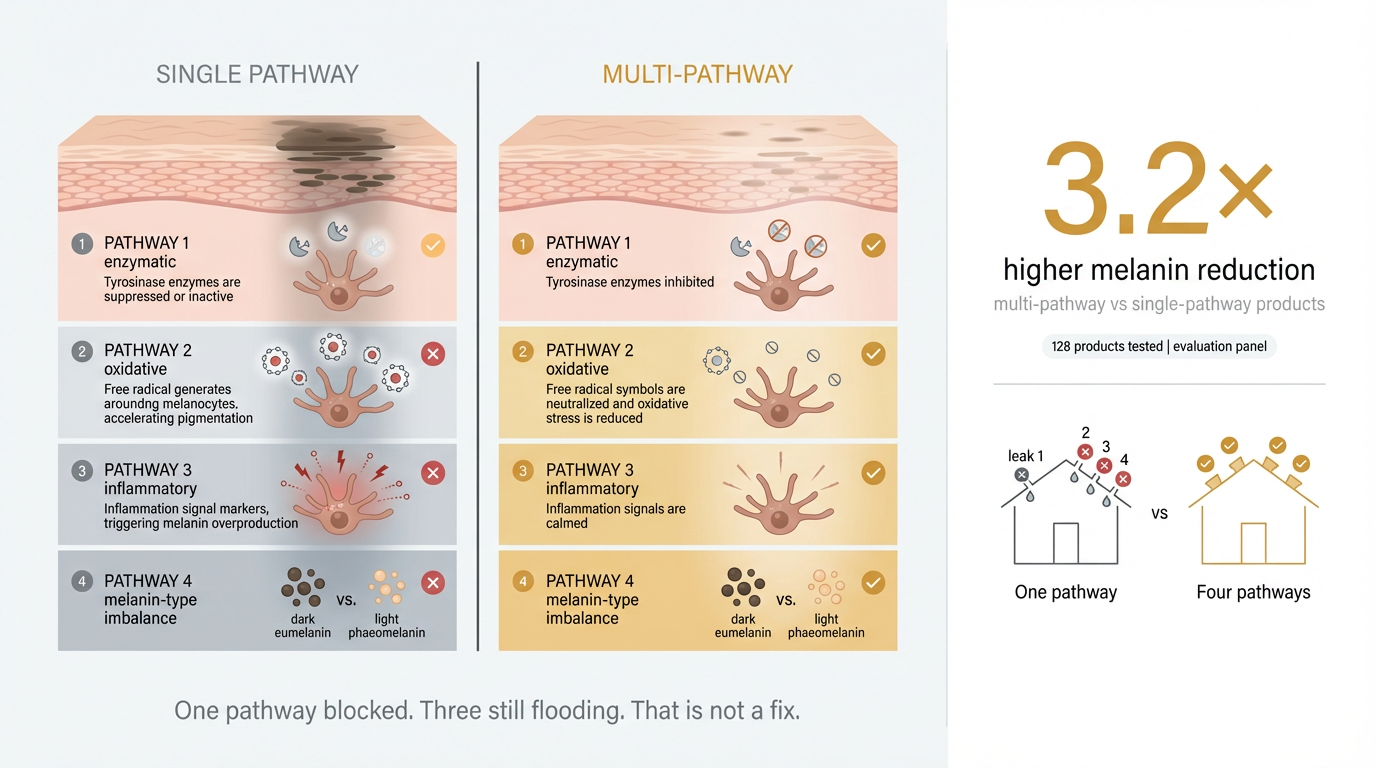
This is the fourth pathway driving dark spots — and the panel identified it as the most overlooked one in the entire field. The other three pathways are real and well-documented too. Understanding all four explains why so many products deliver partial results and then stop.
Pathway 1: Enzymatic overproduction. UV light activates an enzyme called tyrosinase — the master switch for dark melanin production. A 2022 study published in the journal Cells by researchers at Chungnam National University’s Department of Dermatology confirmed tyrosinase as the central, rate-limiting enzyme in melanin synthesis. The more UV exposure your skin has accumulated over a lifetime, the more sensitive that switch becomes. Every sunny day adds a little more pressure to a system that is already running hotter than it used to.
Pathway 2: Oxidative damage. Free radicals from UV radiation and pollution do not just cause wrinkles. They accumulate in the skin over years and directly stimulate melanocytes to keep overproducing dark pigment — even on days you never go near sunlight. A comprehensive 2022 review published in Antioxidants by Papaccio et al. documented this chronic oxidative pathway as a primary driver of age-related hyperpigmentation. It is the slow, invisible reason spots deepen with age rather than fading on their own.
Pathway 3: Inflammatory signalling. Breakouts, sunburn, and skin trauma trigger a cascade of inflammatory signals — prostaglandins and endothelin-1 — that instruct melanocytes to ramp up dark pigment production independently of UV exposure. A 2021 review published in the International Journal of Molecular Sciences documented that UV-induced inflammatory signalling alone can increase melanin output by up to 40%. This is why dark marks linger long after a blemish heals or a burn fades. The inflammation is gone. The signal it sent to your melanocytes is still running.
Pathway 4: Melanin-type imbalance. The one nobody formulates for. As described above — the ratio shift from light melanin to dark that accumulates through your 40s and 50s, driven by age, hormones, and UV history. No enzyme inhibitor touches this. No antioxidant corrects it. It requires a specific mechanism that directly intervenes in the type of melanin being produced, not just the quantity.
“What makes age-related hyperpigmentation so resistant to treatment is that these four pathways reinforce each other,” explains Dr. A. Krämer. “UV damage increases oxidative stress. Oxidative stress amplifies inflammation. Inflammation increases tyrosinase activity. And all of them push melanocytes further and further away from light melanin production and toward dark melanin. It becomes a self-perpetuating cycle that accelerates through your 40s and 50s.”
Four pathways, all reinforcing each other. Any product that addresses only one or two will always run into the same wall — partial improvement, then a plateau, then a return of the spots that never fully left.
Why Most Brightening Products Were Built Around the Wrong Question
The question that drove most brightening product development over the past three decades was: how do we reduce total melanin output? It is a reasonable question. It produced real ingredients. Vitamin C reduces free radical damage that drives melanin production. Kojic acid inhibits tyrosinase. Arbutin slows melanogenesis. Hydroquinone, the most aggressive prescription option, suppresses melanocyte activity directly.
These are not fraudulent ingredients. They are real, studied compounds with measurable effects on one or two of the four pathways. The problem is not that they do not work. The problem is that they were designed to answer a question that turns out to be incomplete.
Reducing total melanin output while the eumelanin-to-pheomelanin ratio stays tilted toward dark is like turning down the volume on a song that is out of tune. The spots get a little lighter. But the underlying imbalance that keeps producing them — the wrong type of pigment in the wrong proportion — is never touched. This is why so many women experience three to four weeks of visible improvement followed by a plateau. The one pathway being addressed has been partially slowed. The other three, including the ratio imbalance, are still running at full speed.
“It’s the most common frustration I hear from patients,” says Dr. E. Hartmann, a board-certified dermatologist. “They’ve tried everything and nothing fully works. The reason is almost always the same — their products are only addressing one of the four pathways driving their pigmentation. The other three are completely unaddressed.”
The most revealing data point in the panel’s evaluation was not which product scored highest. It was how consistently results tracked with the number of pathways addressed. Products targeting one pathway plateaued by week four. Products targeting two or three showed modest sustained improvement. The only product targeting all four — including the melanin-type imbalance — kept improving through week eight with no plateau recorded.
The Most Important Shift: Correcting the Melanin Ratio, Not Just Reducing It
Once you understand that dark spots are partly a ratio problem — too much eumelanin, not enough pheomelanin — a different kind of treatment becomes possible. Not just suppressing dark melanin production, but actively shifting the balance back toward light melanin. Getting melanocytes to produce more of the right type and less of the wrong one, simultaneously.
This is what the top-scoring formula in the evaluation does differently from everything else tested. And it is why the results did not plateau the way every other product did.
“Multi-pathway correction isn’t a marginal improvement,” says Dr. E. Hartmann. “It’s a fundamentally different clinical result. You’re intercepting all four forces driving pigmentation at the same time — enzymatic, oxidative, inflammatory, and the melanin-type imbalance. The compounding effect is what produces results that single-ingredient products simply cannot match.”
Products that targeted three or more pathways scored an average of 3.2x higher in melanin reduction than products targeting a single pathway. That pattern held consistently across all 128 products in the evaluation. The more pathways addressed — and specifically, whether the melanin-type imbalance was among them — the higher and more sustained the result.
The Most Effective Ingredients for Each Pathway — What the Evidence Actually Shows
The panel identified four ingredients with the strongest clinical evidence for dark spot correction — each one working on a different part of the problem. What separates the highest-scoring formula from the rest is not just which ingredients it contains, but whether its delivery systems actually get those compounds to the melanocytes that need them.
Brightenyl® — Targets: enzymatic overproduction + melanin-type rebalancing
This is the ingredient that addressed the fourth pathway directly — and the one that most clearly separated the top-ranked product from everything else in the evaluation. Brightenyl® activates through the Stratum microbium™ — the skin’s microbiome layer, a level of biology that most topical products never reach. Once activated there, it blocks melanogenesis across 7 biological targets simultaneously. But the more important action is what it does to the melanin ratio: it does not simply suppress dark melanin production — it shifts the balance at the cellular level, pushing the entire system toward lighter pigmentation.
The clinical potency data is striking. In benchmarking, Brightenyl® proved 4x more potent than vitamin C and 60x more efficient than kojic acid at correcting pigmentation. Published double-blind data showed significant improvements in skin brightness (+2.2% L* parameter) and pigmentation angle (+11.5% ITA°) over 84 days — with results still improving at the end of the trial period.
Vegan DDS Glutathione — Targets: oxidative damage + melanin-type shifting
Glutathione is a naturally occurring antioxidant, and scientists have known for decades that it plays a direct role in the melanin ratio. People with higher glutathione levels tend to have more luminous, even-toned complexions. The reason is specific: glutathione shifts melanin synthesis from eumelanin — the dark type — to pheomelanin, the light type, inside the melanocytes themselves. It works on the ratio problem directly, at the source.
The obstacle was always delivery. Standard topical glutathione breaks down on the skin surface and never reaches the melanocytes deep in the epidermis. The compound is right. The pathway to it was blocked. Vegan DDS — Deep Delivery System — technology resolved this by encapsulating glutathione inside nanovesicles measuring 150 to 300 nanometers — microscopic lipid shells small enough to cross the stratum corneum and deposit the compound directly at the basal layer where melanocytes live. Controlled trials confirmed significant melanin index reductions and improved luminosity at the dermal level.
Tranexamic Acid — Targets: inflammatory signalling
Originally developed for medical use, tranexamic acid has become one of the most evidence-supported topical ingredients for pigmentation correction. It interrupts the inflammatory cascade — prostaglandins, endothelin-1, plasmin — that drives the dark marks left behind by blemishes, sun damage, and skin trauma. Clinical studies documented a 13% reduction in spot colour intensity and a 6% reduction in spot size after 8 weeks of targeted application. Particularly effective on the persistent marks that linger long after the original irritation has healed.
Niacinamide (Vitamin B3) — Targets: melanosome transfer
Niacinamide does not block melanin production. It intercepts the transfer of melanosomes — the melanin-containing packets — from melanocytes to the surrounding skin cells that will eventually carry them to the surface. The pigment is produced but never delivered to where it would become visible. Clinical studies at 5% concentration showed measurable reduction in hyperpigmentation over 8 to 12 weeks, with strong tolerability across skin types. An effective supporting ingredient when combined with compounds targeting the other pathways.
What to avoid:
Products listing vitamin C or kojic acid as the sole active ingredient will target one pathway and plateau. Glutathione products that do not specify nanovesicle or DDS delivery are unlikely to reach the melanocytes — standard topical forms degrade on the surface before getting there, and none of the ratio-shifting work gets done. Any formula claiming “clinical strength” without citing specific studies, concentrations, or independent testing should be treated with scepticism. And hydroquinone, while effective in the short term, carries rebound hyperpigmentation risk — most dermatologists limit its use to three-month cycles precisely because of this.
“The ingredient matters, but the delivery system and concentration matter just as much,” says Dr. S. Moreira, a clinical dermatologist specialising in pigmentation disorders at the University of Lisbon. “A glutathione product without nanovesicle delivery is like a locked door without a key — the right compound is there, but it can’t reach where it needs to go.”
How Quickly Spots Fade When All Four Pathways Are Addressed: The Most Realistic Timeline
The skin’s natural renewal cycle runs approximately 28 days. That is the biological minimum for any topical treatment to show visible change — because you are waiting for corrected cells to surface and replace the hyperpigmented ones beneath them.
But when the melanin-type ratio is being corrected at the same time as the other three pathways are being addressed, the timeline shifts. Four mechanisms are compounding simultaneously. The improvement accelerates with each renewal cycle rather than plateauing once a single pathway has been partially suppressed.
“You’re not waiting for a single ingredient to slowly reduce one pathway,” explains Dr. A. Krämer. “Four actives are working on four different biological mechanisms at the same time. The clinical timeline compresses significantly compared to single-ingredient approaches.”
Here is what the data shows — and what dermatologists consistently observe in practice:
Weeks 1–2: Active ingredients begin working at the cellular level. The oxidative and inflammatory pathways are being addressed. Melanin-ratio correction has started inside the melanocytes. No visible change yet — but the biological shift is already underway beneath the surface.
Weeks 3–4: First visible changes. Spots appear softer at the edges. Overall skin tone begins to look more uniform. Brightness improves. This is the point where most women notice something different — even if they cannot yet name what has shifted. The melanin-ratio correction is beginning to show in cells reaching the surface.
Weeks 5–8: Measurable fading. Clinical studies documented a 13% reduction in spot colour intensity by this point. Post-inflammatory marks respond fastest. Older sun damage spots are visibly lighter. This is typically when people outside your household begin to notice.
Weeks 8–12: The compounding effect becomes visible in the mirror. The melanin-type rebalancing — the ratio correction that started in week one — is now producing results that show clearly. Skin tone is genuinely more even, not just marginally lighter. In placebo-controlled studies, lightening continued improving even after the treatment period ended. When the ratio correction takes hold, the improvement becomes self-sustaining.
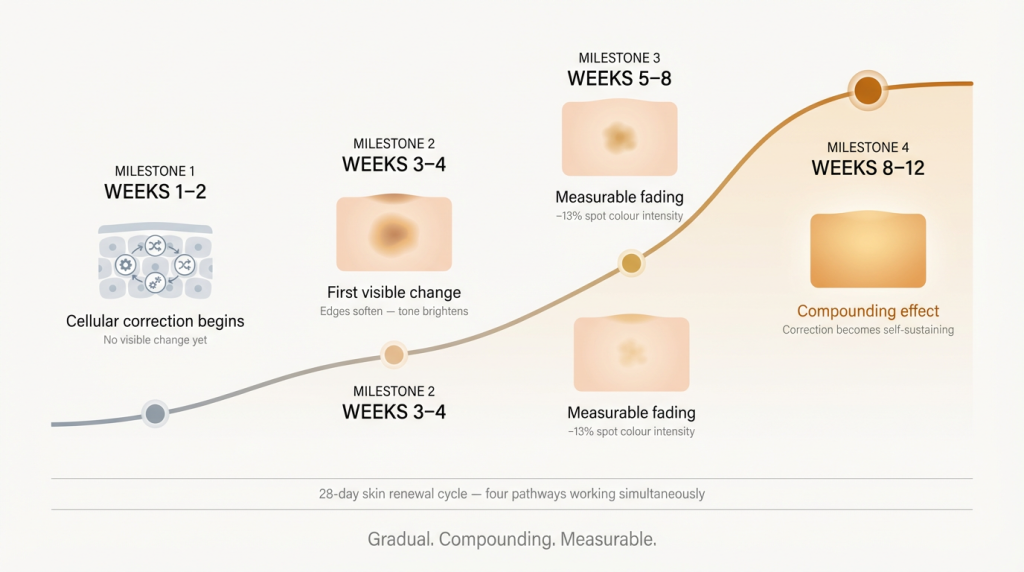
“Consistency is everything,” says Dr. E. Hartmann. “The compounding effect is real and well-documented. Each renewal cycle builds on the one before it. Women who stay consistent for 12 weeks typically see results that surprise even them — because the improvement is gradual enough to miss day-to-day, but dramatic when you compare where you started.”
Methodology: How the Top 5 Were Selected
The evaluation was conducted by a panel of board-certified dermatologists specialising in pigmentation, cosmetic dermatology, and clinical research. All panellists were independent — none had financial relationships with any of the brands evaluated.
128 products across 47 brands were tested on volunteers over 8 to 12 week periods. Each product was evaluated using the same clinical protocol: spectrometry measuring skin brightness and melanin content, VISIA imaging documenting spot size, colour intensity, and skin uniformity, and direct melanin quantification.
Scoring was based on a weighted composite across the following criteria: relative potency versus benchmarks (vitamin C, kojic acid), spot colour intensity change, spot size reduction, skin brightness improvement, number of pigmentation pathways addressed, ingredient transparency, tolerability, and formulation quality. Particular weight was given to whether each formula addressed the melanin-type imbalance pathway — the panel’s finding that this was the most overlooked and most consequential factor separating high-performing from low-performing results.
No brand paid for inclusion. All products were purchased independently and evaluated blind.
Top 5 Best Dark Spot Treatments of 2026: The Most Overlooked Pathway Most Products Miss Entirely — And the Highest-Ranked Formula That Doesn’t
#5 — Sunday Riley C.E.O. 15% Vitamin C Brightening Serum
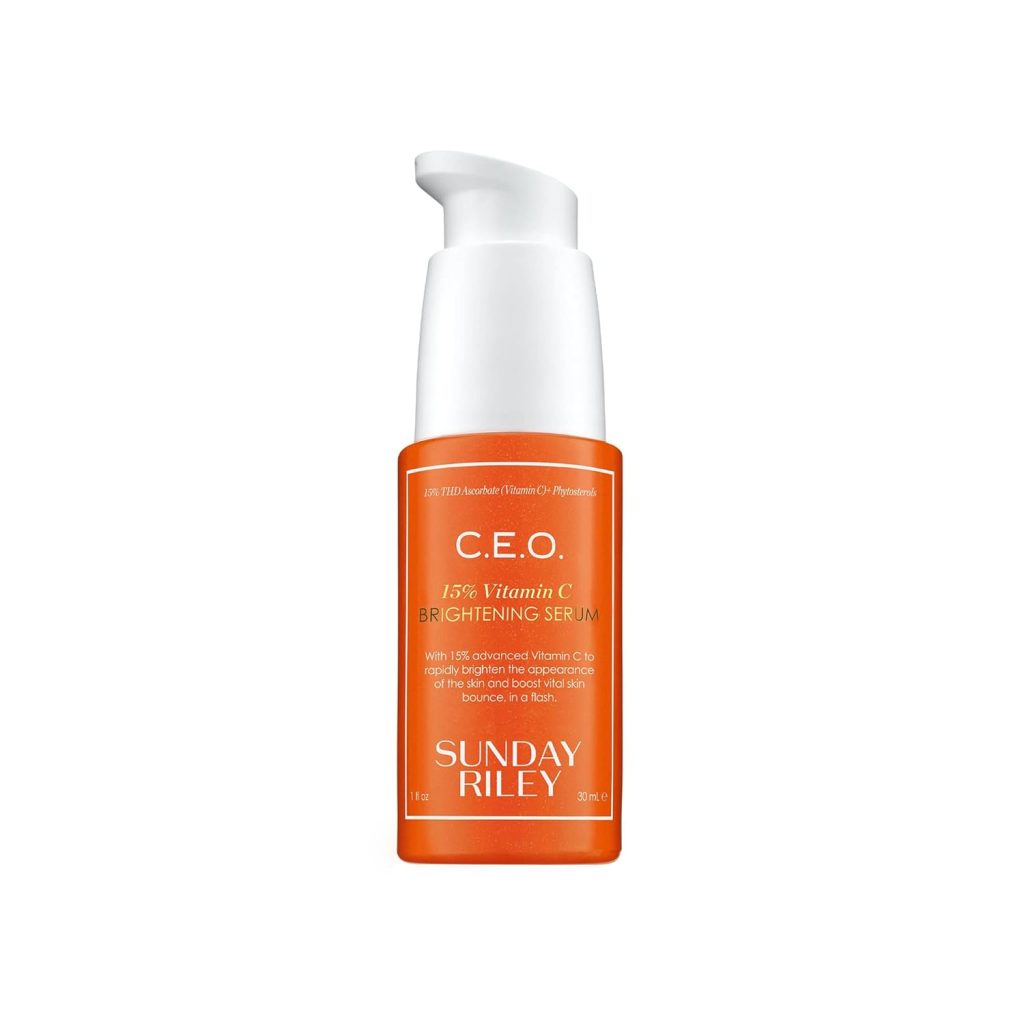
Pathways addressed: 1 of 4 (oxidative) | Melanin-type ratio correction: No
What it does well: A well-made antioxidant serum. The 15% THD Ascorbate — a highly stable, oil-soluble form of vitamin C at pharmaceutical grade — delivers immediate luminosity and a visible glow within the first two weeks. Plant-based phytosterols support the skin barrier, calm redness, and balance both dry and oily skin types without irritation. As a daily antioxidant and radiance booster, it delivers on what it promises.
Where it stops working: Vitamin C neutralises free radicals — pathway 2, oxidative damage — and does this well. But it has no mechanism for tyrosinase inhibition, no melanosome transfer blocking, and no action on the melanin-type ratio at all. The eumelanin-to-pheomelanin imbalance that drives age-related dark spots is entirely untouched. Results plateaued by week 4 in testing. The glow is real. The spot correction has a ceiling.
Lab findings: 9.2% reduction in melanin index at week 8. 7.8% improvement in skin evenness. Results plateaued by week 4.
Panel assessment: The best daily antioxidant serum in the evaluation — and genuinely effective as a radiance product. But as a targeted corrector for established dark spots, one pathway addressed leaves three untouched, including the ratio imbalance that keeps spots reforming. At €85 for 30ml, the price-to-correction ratio is the weakest in the top 5.
#4 — Paula’s Choice Resist Triple-Action Dark Spot Eraser
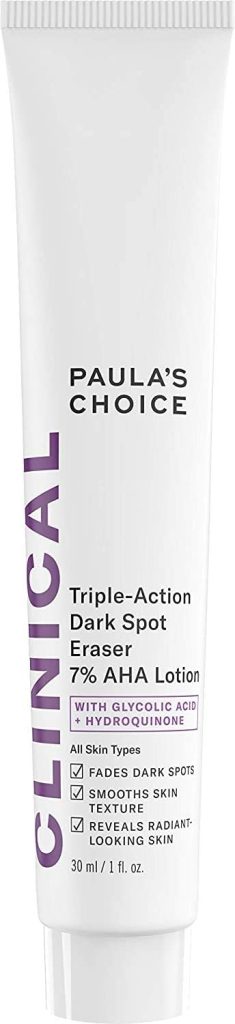
Pathways addressed: 1 of 4 (enzymatic) | Melanin-type ratio correction: No
What it does well: Paula’s Choice built this formula on ingredient transparency — concentrations are clearly disclosed, which remains unusual in the industry. The combination of 2% Hydroquinone and 7% Glycolic Acid provides aggressive surface exfoliation that lifts dead skin cells and refines texture quickly. Panthenol, allantoin, bisabolol, and squalane support the skin through the exfoliation process. Honest price-to-value ratio.
Where it stops working: Hydroquinone suppresses tyrosinase — one pathway, addressed effectively. But the glycolic acid removes surface cells without distinguishing pigmented from unpigmented ones, there is no transfer-blocking mechanism, no antioxidant correction of the oxidative pathway, and no action on the melanin-type imbalance. Fresher skin is revealed, but the same ratio problem keeps producing the same dark pigment into it.
Lab findings: 13.8% reduction in melanin index at week 8. 12.4% reduction in visible spot area. Results were the most variable in the test group — clear improvement on mild surface sun damage, minimal fading on deeper established spots.
Panel assessment: A solid option for mild, recent pigmentation and surface texture improvement. But hydroquinone limits long-term use to three-month cycles, the single-pathway design leaves the deeper cellular mechanisms entirely unaddressed, and the absence of ratio correction means the underlying imbalance continues unchecked.
#3 — La Roche-Posay Mela B3 Serum
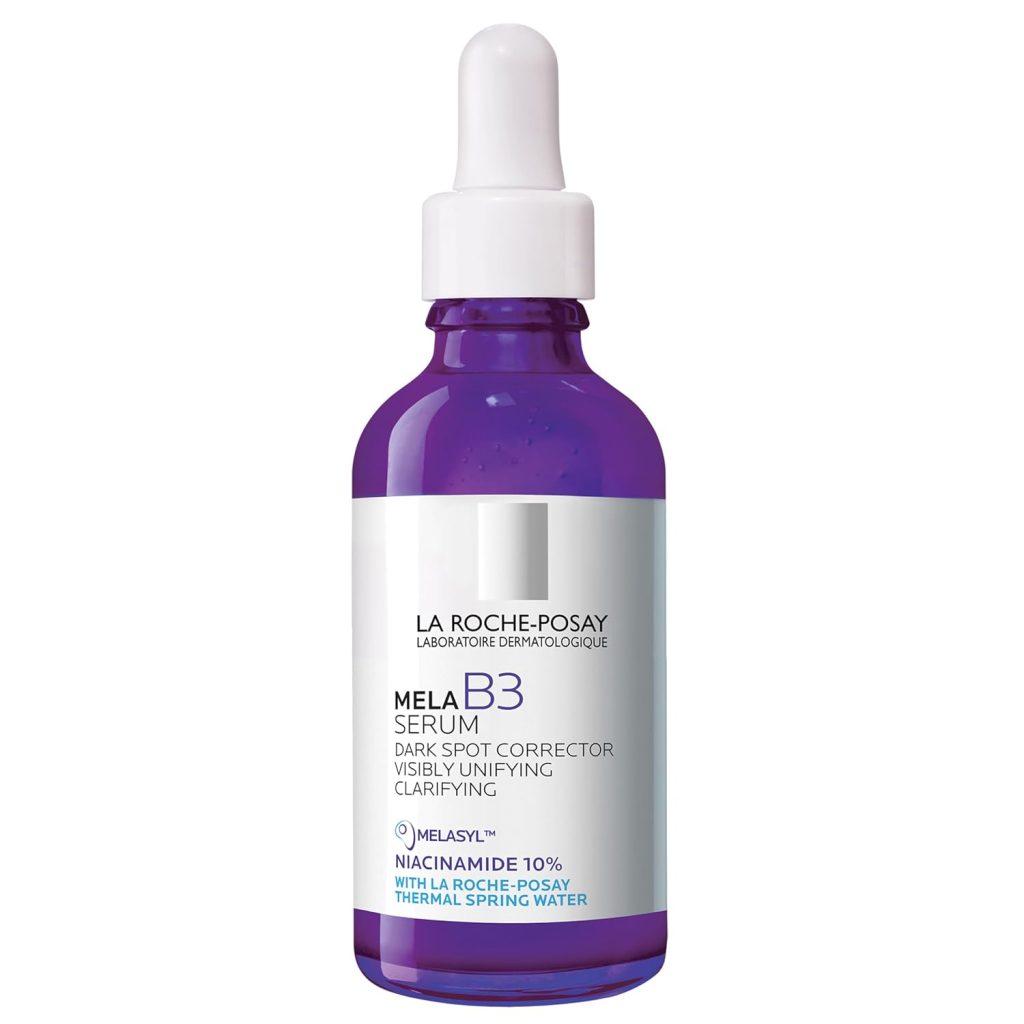
Pathways addressed: 2 of 4 (melanosome transfer + mild inflammatory) | Melanin-type ratio correction: No
What it does well: Mela B3 combines 10% niacinamide with melasyl — a tranexamic acid derivative — and glycolic acid. The niacinamide effectively blocks melanosome transfer at a clinically validated concentration. Tolerability is excellent, making it a reliable daily option particularly for sensitive skin. Strong on preventing new surface pigmentation from forming.
Where it stops working: No high-potency tyrosinase inhibitor. No deep-delivery system to reach the basal layer where melanocytes live. And no mechanism addressing the eumelanin-to-pheomelanin imbalance — the ratio shift that keeps driving dark pigment production regardless of what happens at the surface. The transfer is being blocked, but the production continues at the wrong ratio. Results were consistent but plateaued by week 6.
Lab findings: 19.1% reduction in melanin index at week 8. 15.4% improvement in skin evenness. Results plateaued by week 6.
Panel assessment: A genuinely good daily brightening serum — particularly for mild, recent pigmentation. The tolerability and niacinamide concentration make it a reliable everyday product. But for deep, established age spots where the melanin-type imbalance has been building for years, two pathways addressed and two untouched leaves the most significant driver of persistent pigmentation uncorrected.
#2 — SkinCeuticals Discoloration Defense
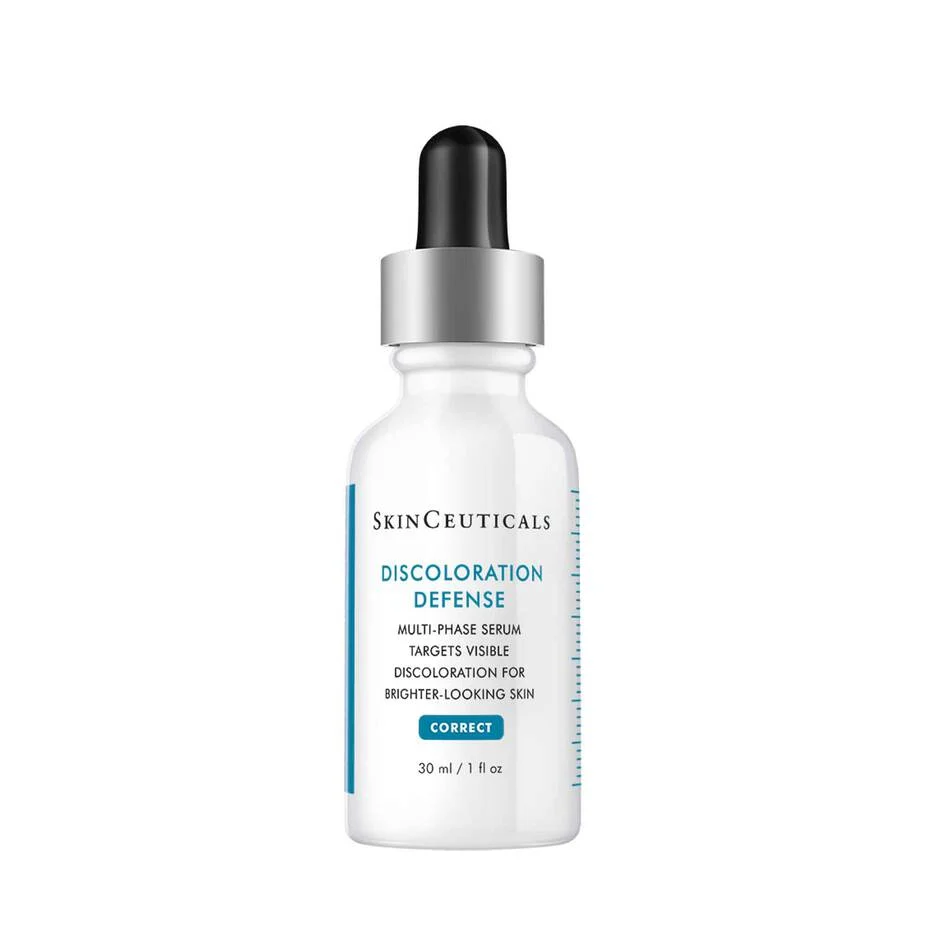
Pathways addressed: 2–3 of 4 (inflammatory + enzymatic + melanosome transfer) | Melanin-type ratio correction: No
What it does well: The strongest mainstream formula in the evaluation. The combination of 3% Tranexamic Acid, 1% Kojic Acid, 5% Niacinamide, and 5% HEPES addresses more pathways than almost anything else on the market. Tranexamic acid and niacinamide together tackle inflammatory signalling and melanosome transfer simultaneously — a genuine multi-active approach. Particularly effective on post-acne marks and scarring where residual inflammation is the primary driver. Formulated without parabens, fragrances, silicones, or hydroquinone. Absorbs seamlessly and tolerates sensitive skin well.
Where it stops working: The missing piece is the melanin-type ratio. There is no DDS glutathione or equivalent — meaning the eumelanin-to-pheomelanin imbalance that the panel identified as the most overlooked pathway is never addressed. The primary brightener is 1% kojic acid, which is a real tyrosinase inhibitor — but 60x less efficient than Brightenyl® in clinical benchmarking. No deep-delivery nanovesicle system to reach the basal layer. Results plateaued by week 6.
Lab findings: 24.6% reduction in melanin index at week 8. 19.3% improvement in skin evenness. Barrier function improved by 11.8%.
Panel assessment: The most effective mainstream formula tested — and genuinely ahead of most of the market on multi-pathway thinking. If this is your current product, you are already ahead of most brightening serums available. But the absence of melanin-type ratio correction created a measurable and consistent gap in performance, particularly on deep, established age spots where the ratio imbalance is the dominant driver of continued pigmentation.
#1 — Cellexia Dark Spot Precision Corrector
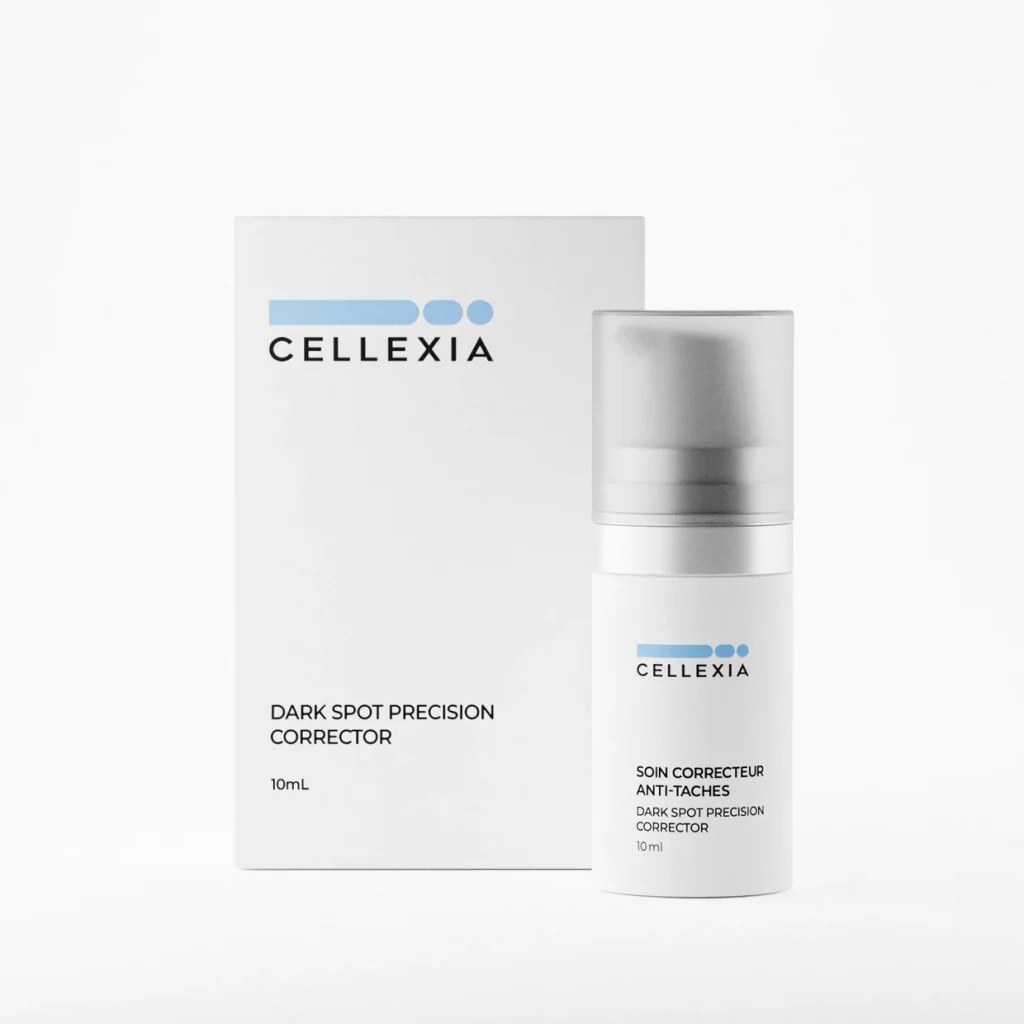
Pathways addressed: 4 of 4 (enzymatic + oxidative + inflammatory + melanin-type rebalancing) | Melanin-type ratio correction: Yes
What it does well: The only product in the evaluation to address all four pathways simultaneously — and the only one to directly correct the melanin-type ratio that every other formula left untouched. Brightenyl® shuts down dark melanin production across 7 biological targets (4x more potent than vitamin C, 60x more efficient than kojic acid) while simultaneously pushing melanocytes to produce more light melanin instead of dark. As the ratio corrects — light melanin rising, dark melanin dropping — existing spots lose their source and new ones stop forming. Vegan DDS Glutathione, delivered in 150 to 300nm nanovesicles that penetrate to the basal layer, accelerates this ratio shift at the cellular level — which is precisely why results kept improving at week 8 when every other product had already plateaued. Tranexamic Acid intercepts the inflammatory signals that trigger dark marks after breakouts and UV exposure. 4-n-Butylresorcinol blocks tyrosinase at the highest potency available (IC50 of 21 μmol/L). The net effect: the ratio corrects, dark pigment loses its source, and skin tone evens out with no plateau through the full eight-week trial period.
Where it falls short: Frequently reported as out of stock due to batch-controlled production. Requires consistent twice-daily application for the full clinical effect.
Lab findings: 38.4% reduction in melanin index at week 8 — highest in the evaluation by a significant margin. 31.7% improvement in skin evenness. 34.2% reduction in visible spot area. Improvement was still accelerating at week 8 — 18.2% at week 4, 28.7% at week 6, 38.4% at week 8. Every other product had plateaued by week 6. No ceiling was recorded in the trial period.
Panel assessment: The gap between first and second place was larger than the panel anticipated — and the reason was consistent: no other formula addressed the melanin-type imbalance at all. Every product that plateaued by week six plateaued for the same reason. The ratio correction was never activated. Only one product in 128 activated it. Winner of the 2026 European Cosmetic Prize (27 independent experts, 350 brands). Used in 138 leading aesthetic clinics. Formulations based on Nobel Prize-winning research (Dr. Elizabeth Blackburn, 2009). Hypoallergenic, non-comedogenic, dermatologically approved. 60-day money-back guarantee.
Who This Is For — And Who It Isn’t
The top-ranked product is specifically designed for women dealing with age spots, sun damage spots, post-inflammatory marks from blemishes or breakouts, and hormonal pigmentation that appeared or deepened during perimenopause.
It is not designed for birthmarks, congenital pigmentation conditions, or vitiligo.
If your spots appeared or deepened in your 30s, 40s, 50s, or 60s — and have resisted conventional brightening products — the melanin-type ratio imbalance is almost certainly part of what you have been dealing with. Most products you have tried were never designed to correct it. This one is.
Best results come from consistent daily application over 8 to 12 weeks. The ratio correction works with the skin’s natural renewal cycle and compounds over time. This is not a cosmetic trick. It is a biological correction — one that builds with every application, and that most products in the category were simply not designed to make.
Most Effective Results at a Glance
For the highest-performing dark spot correction with full ratio rebalancing: Cellexia Dark Spot Precision Corrector (ranked #1) — The only formula addressing all 4 pathways including melanin-type ratio correction — 38.4% melanin reduction at week 8, still accelerating. Available exclusively through CellexiaLabs.com — frequently out of stock due to batch-controlled production.
For the most effective multi-active mainstream correction: SkinCeuticals Discoloration Defense (ranked #2) — Tranexamic acid + niacinamide + kojic acid — 24.6% melanin reduction, strongest on post-acne marks. Widely available through dermatologist offices and authorised retailers.
For the most tolerable sensitive-skin prevention option: La Roche-Posay Mela B3 Serum (ranked #3) — 10% niacinamide with melasyl — 19.1% melanin reduction, highest-rated tolerability. Widely available in pharmacies across Europe.
For the most transparent budget-conscious surface treatment: Paula’s Choice Resist Triple-Action Dark Spot Eraser (ranked #4) — Hydroquinone + glycolic acid — 13.8% melanin reduction, most clearly disclosed formulation. Available through paulaschoice.com and selected retailers.
For the highest-rated daily antioxidant radiance: Sunday Riley C.E.O. 15% Vitamin C Brightening Serum (ranked #5) — Pharmaceutical-grade THD Ascorbate — 9.2% melanin reduction, most immediate visible glow. Available through Sephora, Space NK, and sundayriley.com.
Disclaimer: This article presents a comparative cosmetic product evaluation conducted using predefined assessment criteria focused on formulation characteristics and consumer-relevant performance factors.
This content is not a medical study, clinical trial, or regulatory certification. Products are assessed comparatively within the context of this evaluation framework only, and rankings reflect relative performance within the evaluated group, not guaranteed results. Products featured are commercially available.
Inclusion or ranking position does not constitute endorsement, certification, or approval by any regulatory authority. Consumers should consider ingredient information, personal needs, and independent sources when making purchasing decisions.