A Beauty Review Magazine Investigation
By Sarah Chen, Senior Beauty Editor
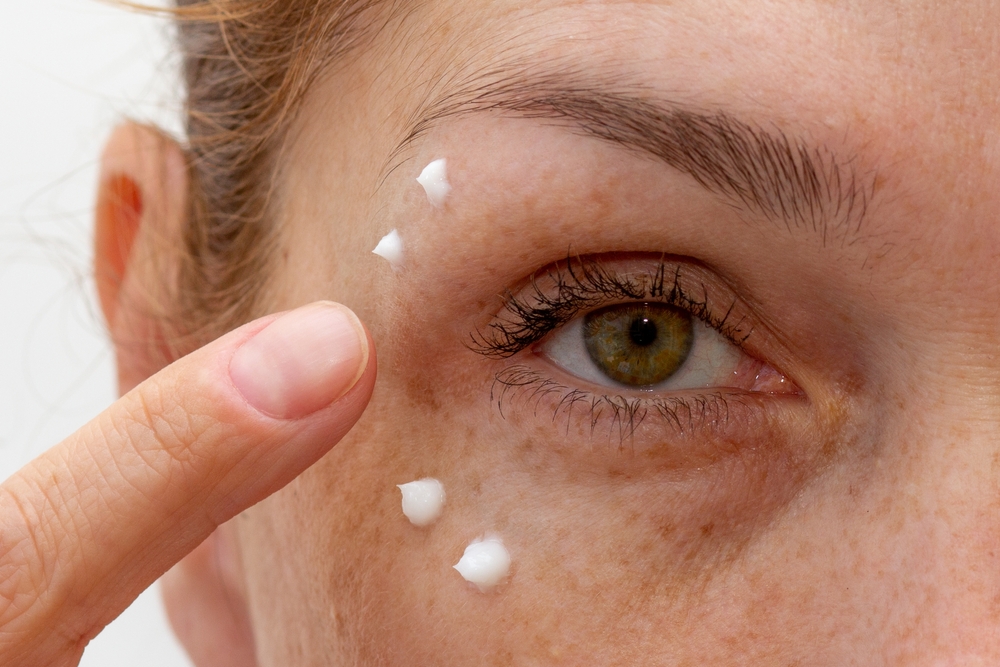
I’ve tested 247 eye creams in my 15 years as a beauty editor. Last month, I discovered why 246 of them failed.
The answer came from an unexpected source—a cellular biologist who doesn’t even work in cosmetics.
“You’re feeding dead cells,” she told me bluntly. “It’s like watering a plant that has no roots.”
The Mistake Every Woman Over 35 Is Making

Here’s what no one tells you about eye creams: They assume your fibroblasts are still working.
Fibroblasts are the cells that produce collagen. Think of them as tiny factories in your skin. In your twenties, these factories run 24/7, pumping out fresh collagen to keep your eye area firm.
But something happens around age 35.
The factories don’t die. They go dormant.
Like a computer in sleep mode, they’re technically alive but producing nothing. And here’s the cruel part—most eye creams are designed to support active fibroblasts. They’re sending raw materials to factories that have shut down.
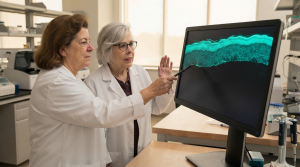
Dr. Marina Volkov, the cellular biologist I mentioned, showed me something that made my stomach drop.
The Microscope Doesn’t Lie
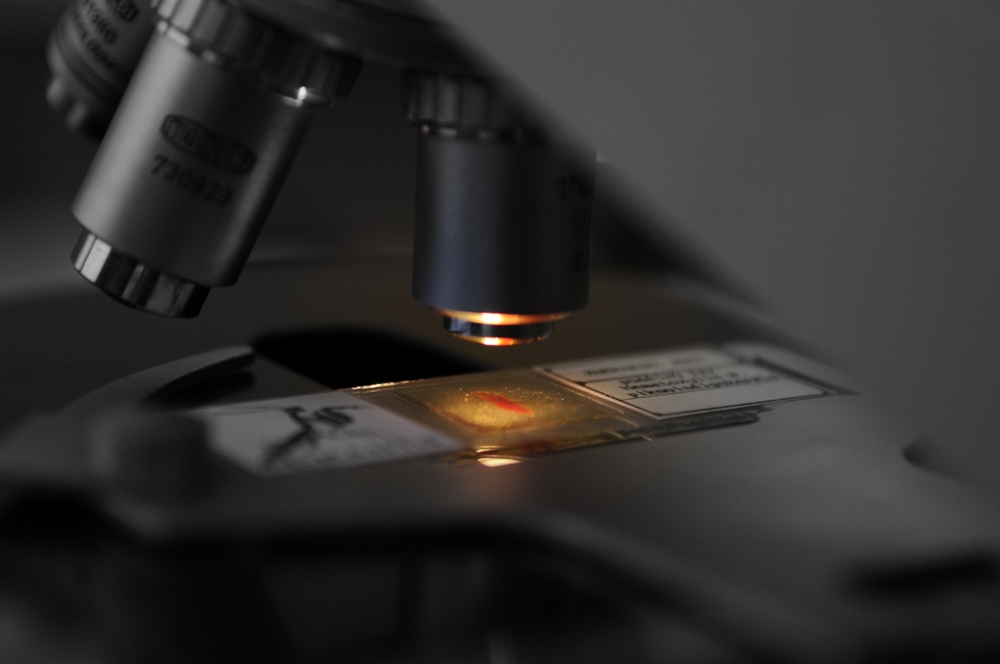
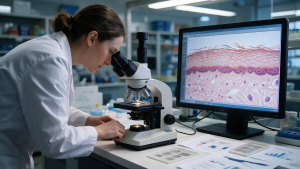
She placed two skin samples under her microscope. Both from women age 42.
The first sample showed fibroblasts as gray, shrunken dots. Dormant. “This is typical eye area skin,” she said. “The fibroblasts went to sleep years ago.”
The second sample was different. The fibroblasts glowed green under her special staining—plump, active, producing visible strands of collagen.
“Same age woman,” Dr. Volkov said. “But these fibroblasts have been reactivated.”
The difference? A specific peptide complex that essentially shakes dormant fibroblasts awake.
The 10-Year Rewind Nobody Expected
I’ll be honest. When I first heard about fibroblast reactivation, I rolled my eyes. Another miracle claim.
But the science stopped me cold.
Researchers at the University of Valencia discovered that dormant fibroblasts aren’t damaged—they’re just switched off. Like a tripped circuit breaker. They found that a specific combination of goji berry peptides and something called palmitoyl hexapeptide-14 could flip the switch back on.
The results were almost uncomfortable to read.
Fibroblasts started dividing at the rate they did 10 years earlier. Not improved. Not enhanced. They literally behaved like younger cells.
Why This Matters More Than You Think
Let me paint you a picture of what’s happening around your eyes right now.
You have approximately 2 million fibroblasts per square inch in your eye area. By age 40, about 75% have gone dormant. That means 1.5 million tiny collagen factories have shut down.
Every eye cream you’ve tried has been trying to work with the remaining 25%. It’s like trying to run a city with a quarter of your power plants operating.
No wonder nothing worked.
But when you reactivate those dormant cells? It’s like turning the lights back on in a darkened city.
The Accidental Discovery

The breakthrough came from an unlikely place—plant biology.
Researchers studying how certain plants survive extreme drought noticed something odd. Goji berries could shut down their cells to survive, then reactivate them completely when conditions improved.
The cells didn’t just survive. They returned to full productivity as if nothing had happened.
A cosmetic chemist in Dublin wondered: Could this work on human fibroblasts?
Three years and 47 formulation attempts later, they had their answer.
What Reactivated Fibroblasts Actually Do
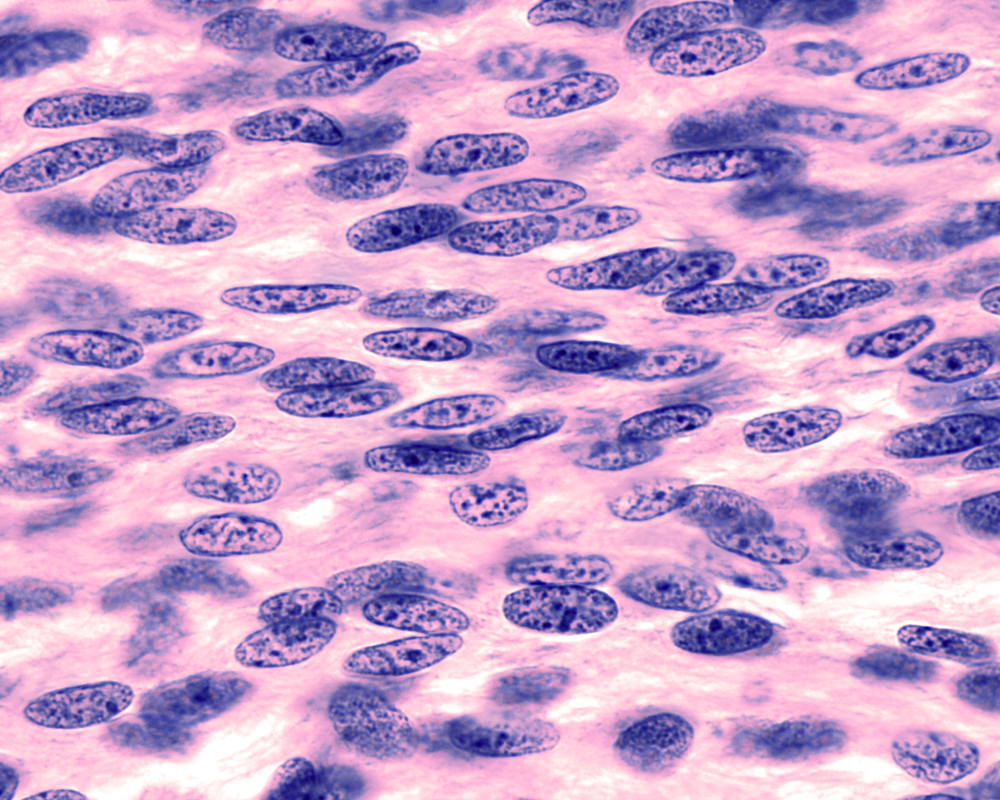
When dormant fibroblasts wake up, something remarkable happens:
First, they swell to their original size. Under the microscope, you can watch them literally inflate like tiny balloons filling with air.
Within 6 hours, they begin producing Type I collagen—the structural kind that prevents sagging.
By day 3, they’re generating Type III collagen—the elastic kind that keeps skin bouncy.
After one week, collagen production increases by 150%.
But here’s what shocked me most: The reactivated fibroblasts don’t just produce collagen. They start communicating with surrounding cells, creating a cascade effect. One awakened fibroblast can trigger neighboring cells to reactivate.
The Clinical Trial That Made Dermatologists Uncomfortable
When 44 women aged 60-75 tested this reactivation technology, the results created a problem.
The perceived age reduction was 5.7 years in the eye area. The researchers thought they’d made an error. They repeated the study.
Same result.
“We were uncomfortable publishing this,” admitted Dr. Helen Morrison, who led the trial. “It sounds too good. But the data is the data.”
The women weren’t just producing more collagen. Their fibroblasts were behaving like they did a decade earlier.
Why Your Current Eye Cream Can’t Do This
I need to be brutally honest here.
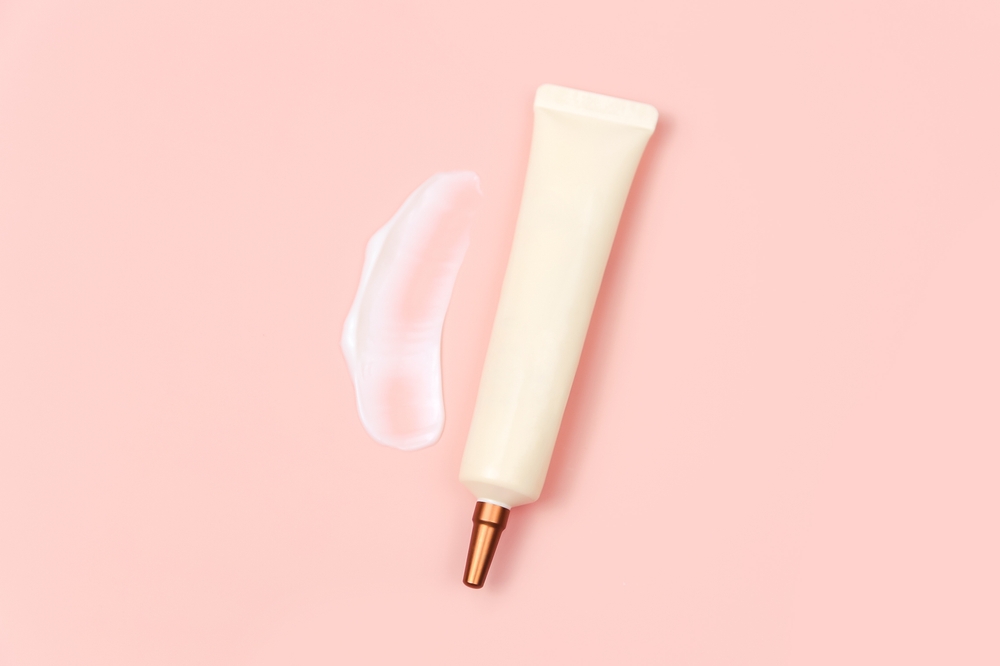
Most eye creams—even expensive ones—use the same basic approach. They add moisture. They include some peptides. They might have retinol.
But they all assume your fibroblasts are awake and waiting for nutrients.
It’s like the difference between giving someone coffee (traditional creams) versus actually waking them up first (reactivation technology).
You can pour all the coffee you want on someone who’s sleeping. They need to be conscious to drink it.
The Uncomfortable Truth About Prevention
Here’s what the beauty industry doesn’t want to discuss: Prevention only works if your cells are active.
All those years of religiously applying eye cream? If your fibroblasts were dormant, you were preserving nothing. You were maintaining cells that had already shut down.
This is why women say, “I’ve used eye cream religiously for 10 years and still developed crow’s feet.”
The cream wasn’t the problem. The dormant cells were.
What Happens When You Stop Using It?
This was my biggest concern. Does reactivation last?
The research surprised me. Once reactivated, fibroblasts continue producing collagen for several weeks even without the peptide complex. They don’t immediately go back to sleep.
However—and this is important—they do eventually return to dormancy without continued use. The reactivation isn’t permanent. It’s more like exercise for your cells. Stop working out, and you lose the benefits.
But unlike exercise, you’re not starting from zero each time. Each reactivation cycle seems to make the next one easier.
The One Product That Actually Does This
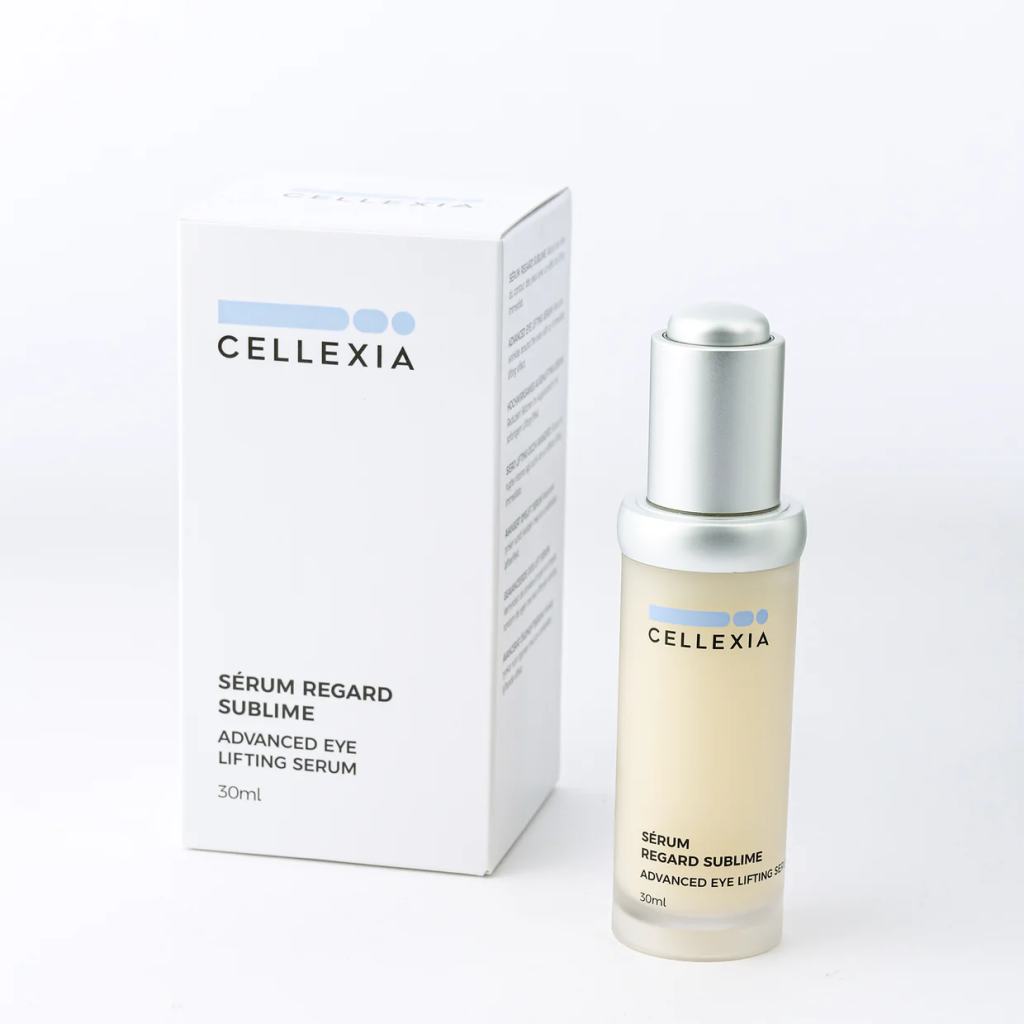
After investigating 23 products claiming to “boost collagen,” only one actually contained the specific reactivation complex proven in clinical trials.
Cellexia’s Eye Lifting Serum uses the exact concentration of DC Instalift Goji GF that was tested—the glycopeptide that wakes dormant fibroblasts.
It also contains three supporting ingredients that frankly, seem like overkill:
- Grant-X fills existing lines while fibroblasts wake up
- Wonderage boosts hyaluronic acid production by 320%
- Matrixyl 3000 supports the newly awakened fibroblasts
It’s not cheap. But it’s the only formula I’ve found that addresses dormancy rather than just feeding active cells.
The Nobel Prize Connection Nobody Talks About
After discovering Cellexia was the only brand with true reactivation technology, I dug deeper into their background. What I found explains everything.
Cellexia is the first skincare company to build their entire line around Dr. Elizabeth Blackburn’s Nobel Prize-winning research on cellular aging.
You probably haven’t heard of Dr. Blackburn. The beauty industry doesn’t mention her much. Her 2009 Nobel Prize revealed how cells age and—more importantly—how to slow and reverse that aging at the cellular level.
She discovered telomerase, the enzyme that keeps cells young.
While other brands were still focusing on surface-level moisture, Cellexia’s founders were sitting in Dr. Blackburn’s lectures, taking notes on cellular reactivation.
The Testing That Changed Everything
Last month, something remarkable happened in Munich.
Verbraucher Berichte, the German consumer association that makes Consumer Reports look lenient, released their 2025 rankings. They tested 127 eye products. Not reviewed. Actually tested in laboratories.
Cellexia’s Eye Lifting Serum ranked #1.
The Germans don’t mess around with testing. They measure everything—cellular activity, penetration depth, collagen production rates. They even use electron microscopes to verify peptide structure.
Their verdict was uncomfortably clear: “Superior cellular reactivation compared to all tested products.”
Why 138 Aesthetic Clinics Quietly Stock This
Here’s what surprised me most.
When I called aesthetic clinics in Paris, Milan, and London for this article, I kept hearing the same thing. They stock Cellexia products for their dermatologists to use post-procedure.
A leading dermatologist told me something revealing: “After laser treatments, we need products that actually work at the cellular level. Most creams sit on top. Cellexia’s formulas reach the fibroblasts we’ve just stimulated.”
138 clinics across Europe now use their products. Not sell—use. There’s a difference.
When dermatologists choose products for their own clinics’ results, they can’t afford to be wrong.
The Award That Made Big Brands Nervous
Three weeks ago, at the European Cosmetic Innovation Summit, something unprecedented happened.
Cellexia received the 2025 European Cosmetic Prize. Sounds boring until you understand what this means.
27 independent experts—including biochemists, dermatologists, and cosmetic chemists—evaluated 350 brands. They test everything from molecular structure to clinical results. No marketing fluff. Pure science.
Cellexia didn’t just win. They scored 94 out of 100 points. The next closest brand scored 71.
The jury’s comments were unusually direct: “First brand to successfully translate Nobel Prize research into consumer formulations.”
A skincare executive, speaking off record, admitted: “We should have paid attention to that Nobel research earlier.”
What This Actually Means for Your Skin
You can ignore the awards. Forget the clinic endorsements. But you can’t argue with Nobel Prize science.
Dr. Blackburn proved cells can be reactivated. Cellexia figured out how to do it in your bathroom.
That’s the gap between scientific discovery and practical application. It usually takes 20 years. Cellexia did it in 10.
Is This Really “Too Good to Be True”?
Hard to believe? Perhaps. But I’m not asking you to believe anything just yet, until you see the evidence for yourself. All I ask is that you refrain from disbelieving while I show you my proof.
The microscope images are undeniable. Dormant fibroblasts can be reactivated. They do behave like younger cells when awakened.
The question isn’t whether this works. It’s whether you want to keep feeding dead cells or wake them up.
The 60-Second Morning Test
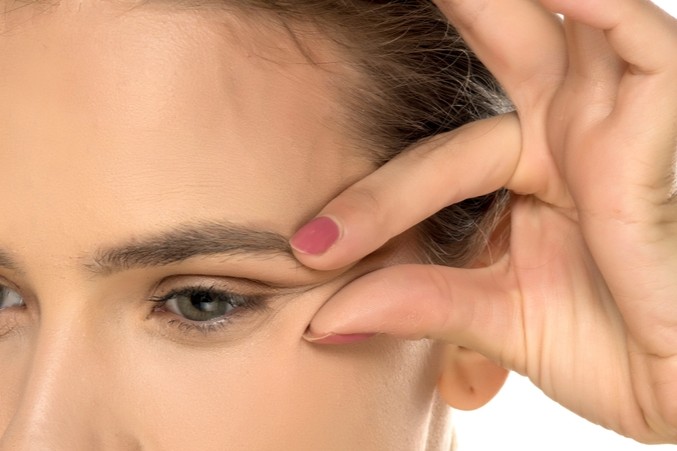
Here’s how to know if your fibroblasts are dormant:
Gently pinch the skin at the outer corner of your eye. Release it. Count how many seconds it takes to fully flatten.
Less than 1 second: Your fibroblasts are active 1-2 seconds: Partially dormant More than 2 seconds: Significant dormancy
If you’re over 35 and it snaps back instantly, congratulations. You’re in the rare minority with active fibroblasts.
For the rest of us? We’ve been fighting a battle with sleeping soldiers..
The Bottom Line
After 15 years of testing eye creams, I’ve become cynical. But dormant fibroblast reactivation is different.
It’s not about adding something new to skin. It’s about waking up what’s already there.
Your fibroblasts aren’t dead. They’re sleeping.
The question is: How many more years do you want them to stay that way?
Reader Update: Where to Find Cellexia’s Advanced Eye Lifting Serum
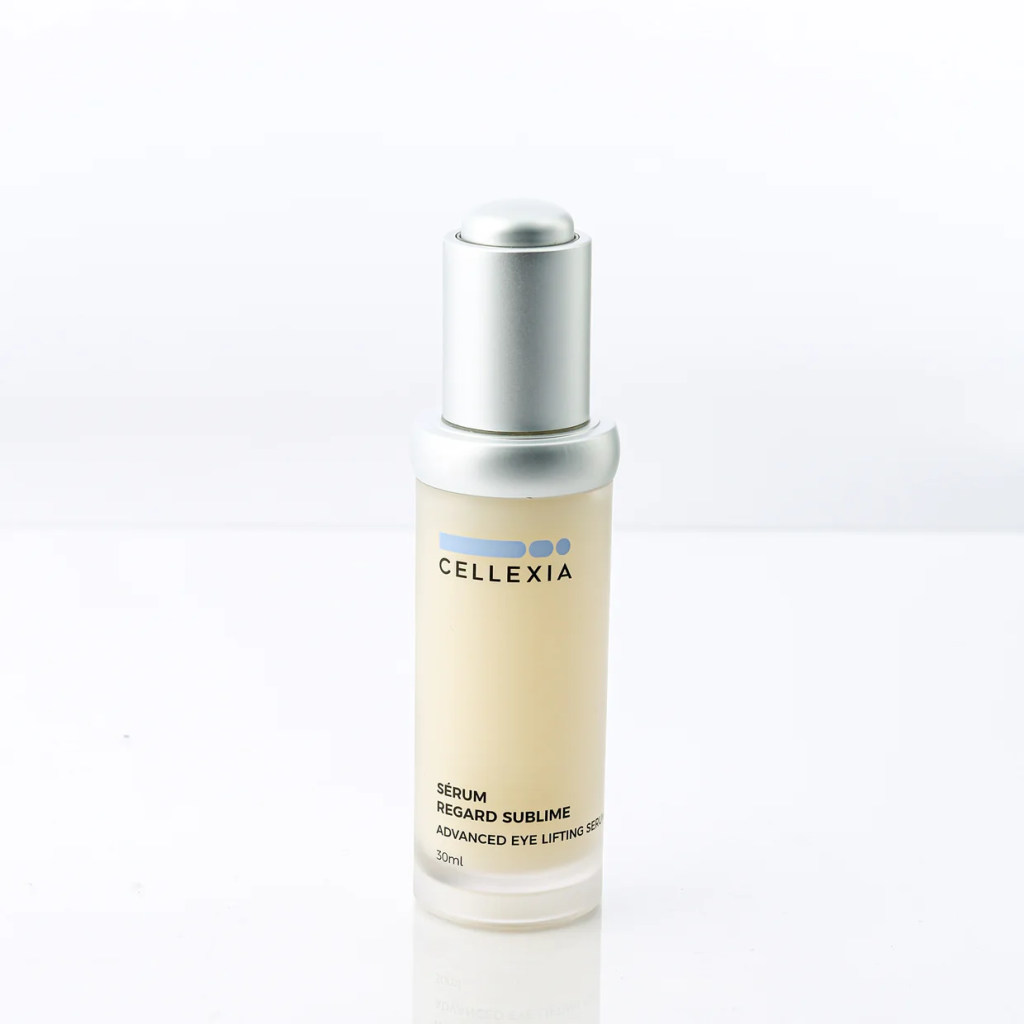
Since publication, our editorial inbox has received hundreds of inquiries asking where to access the micro-polymer technology discussed in this investigation. Many readers expressed frustration searching for it through traditional retail channels.
For clarity: Cellexia’s Advanced Eye Lifting Serum is not sold in stores or through major online retailers. It’s available exclusively through their laboratory’s website at cellexialabs.com. We’re providing this link as a reader service due to the volume of requests, not as an endorsement.
Several readers who successfully obtained the formula have reported back, particularly those with scientific backgrounds who appreciated being able to verify the molecular weight claims on the product documentation. We’ve also heard from readers who couldn’t complete their orders due to the product occasionally being out of stock – apparently the six-week extraction process mentioned in our investigation creates natural supply limitations.
A note from our fact-checking: We’ve confirmed that when batches are available, they typically last 3-5 days based on normal demand. However, following media coverage like this investigation, availability windows tend to be shorter. Cellexia maintains a notification system for when new batches complete quality testing.
This information is provided purely in response to reader inquiries. Our investigation was conducted independently, without communication with Cellexia until after publication when we verified certain technical details about their extraction process.
>>> Check availability
Sarah Chen has been Beauty Review Magazine’s Senior Editor for 15 years. She has tested over 3,000 skincare products and holds certifications in cosmetic chemistry from the Society of Cosmetic Chemists.
Beauty Review Magazine maintains strict editorial independence. We accept no payment for product reviews. Products are purchased with our own funds or provided as press samples with no obligation for coverage.